How AI Is Changing Digital Marketing
Let’s be honest—digital marketing today feels nothing like it did even five years ago. Back then, marketers spent hours guessing what customers wanted, manually posting content, running ads blindly and hoping something would work. Fast forward to today, Artificial Intelligence (AI) has stepped in like a super-smart assistant that never sleeps, never gets tired and learns faster than any human ever could.
AI is no longer a “future concept.” It’s already here, quietly working behind the scenes—suggesting what content to post, who to target, when to send emails, and even what words will convert better. If digital marketing is a race, AI is the turbo engine pushing brands ahead of their competition.
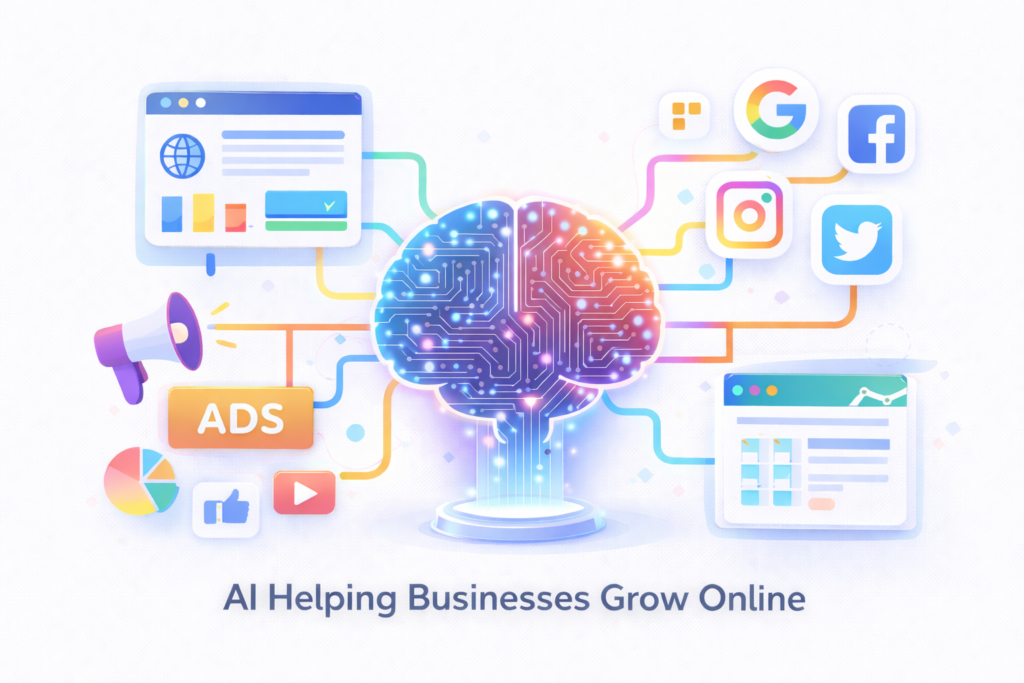
What makes AI so powerful is its ability to process massive amounts of data in seconds. Humans can analyze data, sure—but AI can analyze millions of data points instantly and turn them into actionable insights. That’s a game changer.
In this blog article, we’ll break down how AI is changing digital marketing in a very user-friendly, easy-to-understand way. No technical jargon. No complicated explanations. Just simple language, real-world examples, and clear insights that help you understand what’s happening and why it matters to you—whether you’re a business owner, marketer, freelancer, or just curious about AI.
Understanding AI in Simple Words
What AI Really Means
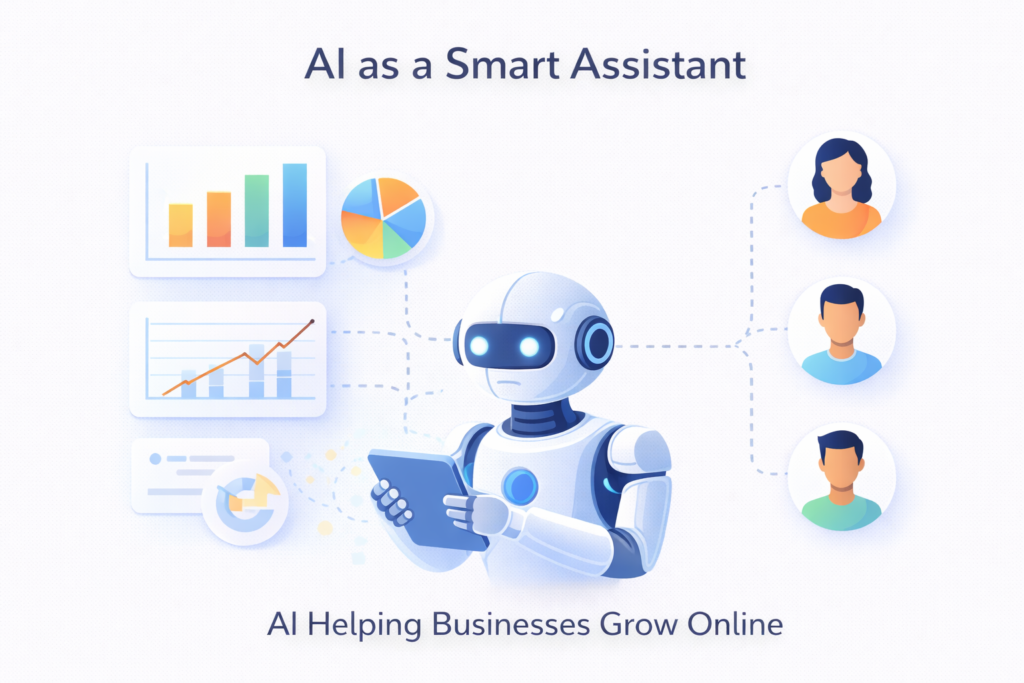
Artificial Intelligence sounds like a complex, sci-fi term, but in reality, it’s quite simple. AI is basically a technology that allows machines and software to think, learn, and make decisions like humans—but much faster and more accurately.
Think of AI as a very smart brain that learns from data. The more data it sees, the smarter it gets. For example, when Netflix suggests movies you might like or Amazon recommends products based on your past purchases—that’s AI at work.
In digital marketing, AI helps businesses understand:
-
What customers like
-
What they search for
-
When they are most active
-
What content or ads they respond to
Instead of guessing, AI gives marketers clear answers backed by data.
AI vs Traditional Automation
Now, you might be thinking, “Isn’t this just automation?” Not exactly.
Traditional automation follows fixed rules. For example:
-
Send an email after someone signs up
-
Post a scheduled social media post
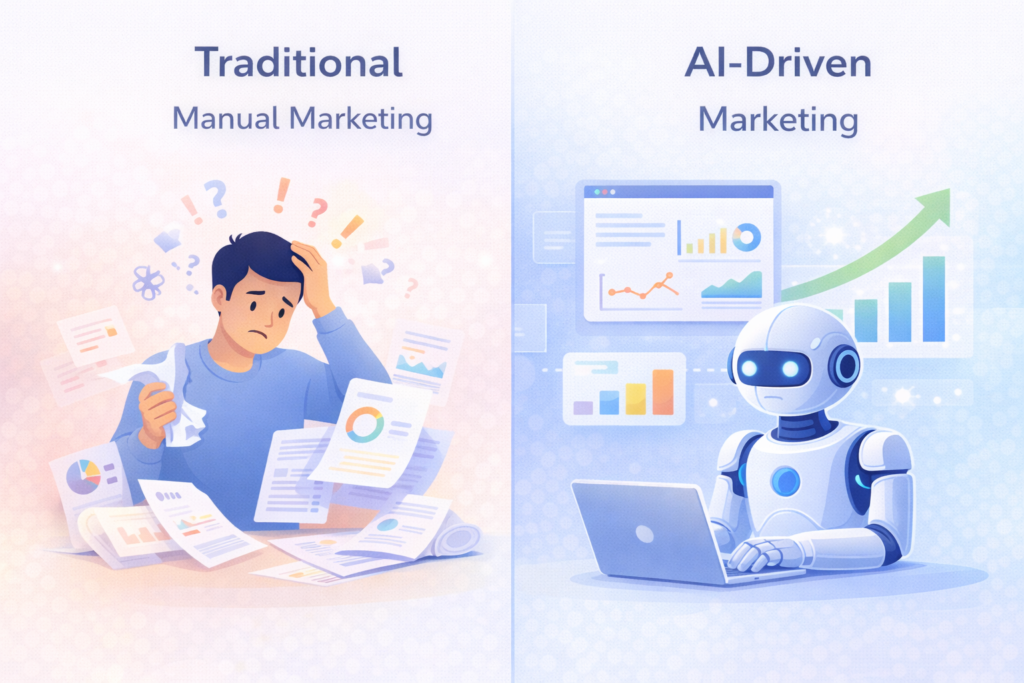
AI, on the other hand, learns and adapts. It doesn’t just follow rules—it improves over time. If an ad isn’t performing well, AI can automatically adjust it. If customers stop opening emails at night, AI learns to send them in the morning instead.
In short:
-
Automation = follows instructions
-
AI = learns, thinks, and improves
That’s why AI is such a big deal in digital marketing.
The Evolution of Digital Marketing Before AI
Manual Marketing Era
Before AI, digital marketing was mostly manual and time-consuming. Marketers had to:
-
Manually analyze spreadsheets
-
Guess which ads would work
-
Create one-size-fits-all campaigns
-
Spend hours on repetitive tasks
Success depended heavily on experience and intuition. Sometimes campaigns worked. Sometimes they didn’t. And often, no one really knew why.
This approach wasn’t just slow—it was inefficient. Businesses wasted money on ads that didn’t convert and content that didn’t connect with the audience.
Data Overload Problems
As digital platforms grew, so did data. Marketers suddenly had access to:
-
Website traffic data
-
Social media engagement
-
Email performance
-
Customer behavior metrics
The problem? There was too much data and too little time to analyze it properly.
That’s where AI entered the picture. It didn’t just help manage data—it transformed it into insights. AI made sense of the chaos and gave marketers clarity.
How AI Is Transforming Digital Marketing Strategies
Smarter Decision-Making
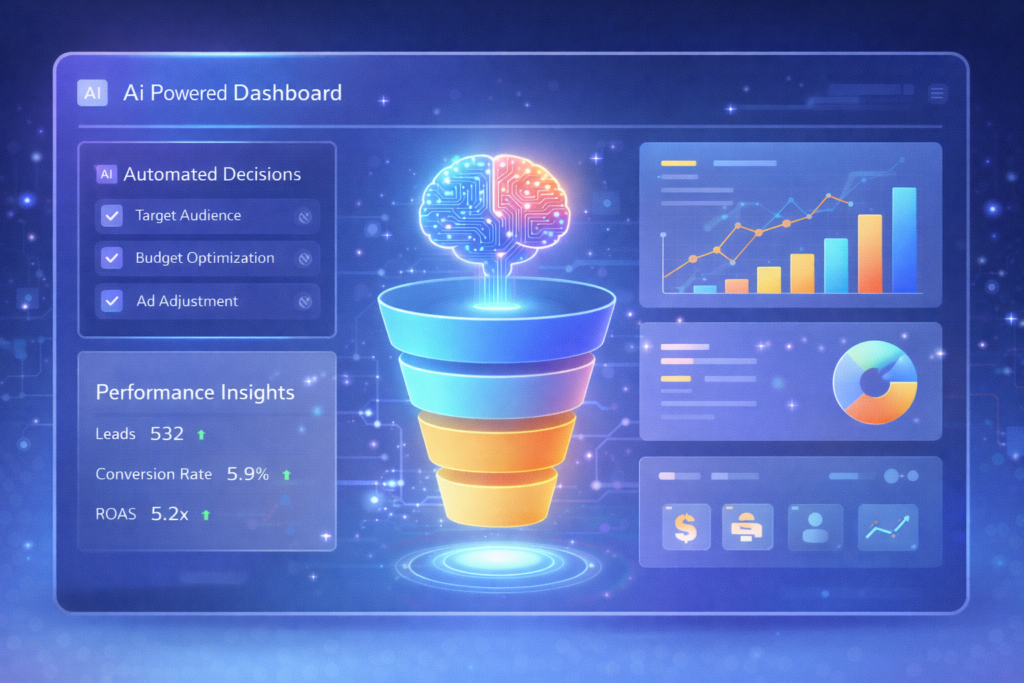
One of the biggest ways AI is changing digital marketing is by improving decision-making. Instead of relying on gut feelings, marketers can now rely on data-driven insights.
AI can tell you:
-
Which campaign will perform best
-
Which audience segment is most likely to convert
-
Which content format works better (video, blog, image)
This means fewer mistakes and better results.
Faster Execution
AI also speeds up execution. Tasks that once took days can now be done in minutes. For example:
-
Creating ad variations
-
Testing headlines
-
Optimizing campaigns
With AI handling the heavy lifting, marketers can focus more on creativity and strategy.
AI in Customer Data Analysis
Understanding Customer Behavior
Customers leave digital footprints everywhere—websites, social media, emails, apps. AI collects and analyzes all this data to understand customer behavior better than ever before.
AI can identify patterns like:
-
What products customers view most
-
Where they drop off in the buying process
-
What triggers them to make a purchase
This deep understanding allows businesses to create more relevant marketing messages.
Predictive Analytics Explained Simply
Predictive analytics sounds complicated, but it’s actually very simple. It means predicting future behavior based on past data.
For example:
-
Will this customer buy again?
-
Is this lead likely to convert?
-
Which product will trend next month?
AI answers these questions with impressive accuracy, helping businesses stay one step ahead.
Personalization at Scale with AI
People don’t want generic content anymore. They want messages that feel personal—and AI makes that possible.
AI helps deliver:
-
Personalized website experiences
-
Customized blog recommendations
-
Tailored ads for different users
For example, two people visiting the same website might see completely different content based on their interests. That’s AI-driven personalization.
Personalized Product Recommendations
Ever noticed how online stores seem to “know” what you want? That’s AI analyzing your behavior and suggesting products you’re most likely to buy.
This not only improves user experience but also increases sales.
AI-Powered Content Creation
Blogs, Ads, and Social Media
AI is now helping marketers create content faster. It can:
-
Generate blog ideas
-
Write ad copies
-
Suggest social media captions
However, AI doesn’t replace humans—it supports them. The best content still comes from human creativity, with AI acting as a helpful assistant.
Human + AI Collaboration
Think of AI as a co-writer. It handles research, structure, and optimization, while humans add emotion, storytelling, and authenticity.
This combination leads to better, more engaging content.
AI in SEO and Search Engine Marketing
Keyword Research
AI tools can analyze thousands of keywords in seconds and suggest the best ones based on:
-
Search volume
-
Competition
-
User intent
This makes SEO faster and more effective.
Search Intent Optimization
AI understands what users are really looking for—not just what they type. This helps create content that truly answers user questions and ranks higher on search engines.
AI in Social Media Marketing
Scheduling and Posting Made Easy
Social media can feel like a never-ending job. Posting daily, choosing the right time, writing captions, replying to comments—it’s a lot. This is where AI steps in like a reliable assistant who never forgets anything.
AI-powered tools analyze when your audience is most active and automatically schedule posts at the best times. Instead of guessing whether 9 AM or 7 PM works better, AI looks at real engagement data and decides for you. Over time, it keeps learning and improves posting schedules even more.
AI also helps with:
-
Caption suggestions
-
Hashtag recommendations
-
Content performance predictions
This means your posts are more likely to reach the right people at the right time without you spending hours planning every detail.
Social Listening and Trend Tracking
Another powerful feature of AI in social media marketing is social listening. AI tools monitor conversations across platforms to understand what people are talking about, what they like, and what they complain about.
For example, AI can:
-
Track brand mentions
-
Analyze customer sentiment
-
Identify trending topics
This helps businesses respond quickly, improve their reputation, and create content that aligns with what users care about right now. Instead of reacting late, brands can stay ahead of trends.
AI Chatbots and Customer Support
24/7 Customer Engagement
Let’s face it—customers expect quick answers. They don’t want to wait hours or days for a reply. AI chatbots solve this problem beautifully.
AI chatbots can:
-
Answer common questions instantly
-
Guide users through products or services
-
Help with order tracking and support
The best part? They work 24/7. Even when your team is asleep, AI chatbots are still engaging with customers, improving satisfaction and trust.
Improving User Experience
Modern AI chatbots don’t feel robotic anymore. They understand natural language and respond in a friendly, human-like way. This creates a smoother and more enjoyable user experience.
When customers get quick, helpful answers, they’re more likely to stay longer, trust your brand, and eventually make a purchase.
AI in Email Marketing
Smarter Campaigns
Email marketing is far from dead—AI has actually made it smarter than ever. Instead of sending the same email to everyone, AI helps create targeted campaigns based on user behavior.
AI can decide:
-
Who should receive an email
-
When it should be sent
-
What subject line works best
This makes emails feel more personal and less like spam.
Higher Open and Click Rates
AI tests different subject lines, email formats, and content styles to see what performs best. Over time, it automatically uses the highest-performing versions.
The result?
-
Better open rates
-
Higher click-through rates
-
More conversions
In simple words, AI helps your emails get noticed—and acted upon.
AI in Paid Advertising
Smart Bidding
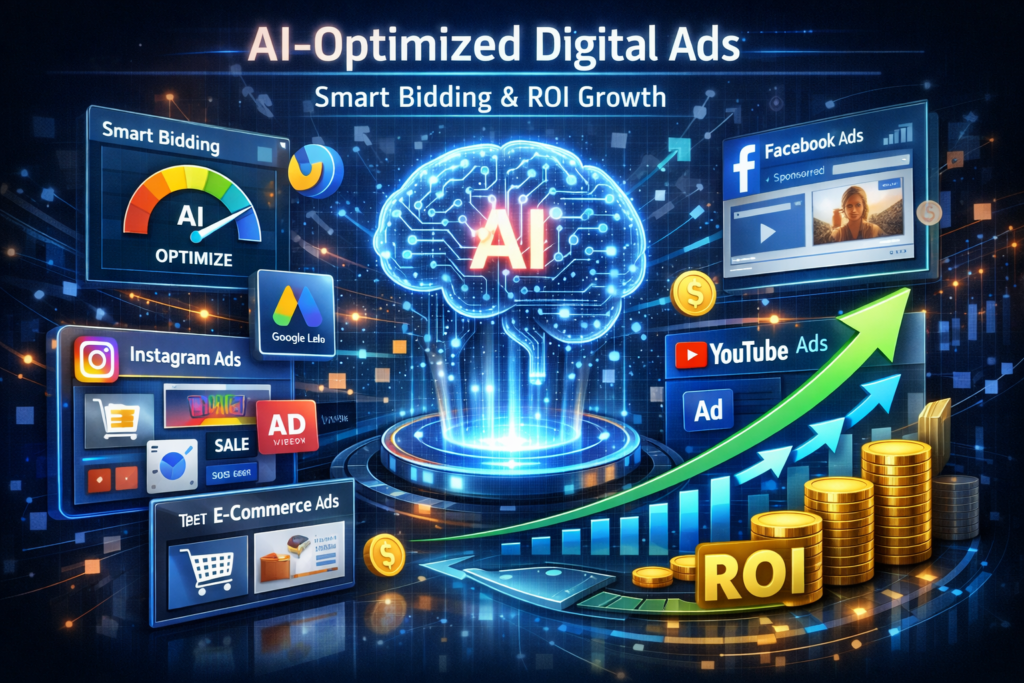
Running ads manually can be expensive and risky. AI changes the game with smart bidding. It analyzes data in real time and adjusts bids automatically to get the best results.
AI considers factors like:
-
User behavior
-
Device type
-
Location
-
Time of day
This ensures your ad budget is spent wisely.
Ad Performance Optimization
AI doesn’t just launch ads—it continuously improves them. If an ad isn’t performing well, AI tweaks it. If another version performs better, AI shifts the budget toward it.
This constant optimization leads to:
-
Lower ad costs
-
Better ROI
-
More accurate targeting
Benefits of AI in Digital Marketing
Time-Saving and Efficiency
One of the biggest benefits of AI is time-saving. Tasks that used to take hours now take minutes. This allows marketers to focus on strategy, creativity, and growth instead of repetitive work.
Cost Efficiency and Better ROI
AI reduces wasted spending by targeting the right audience with the right message. This leads to better results with lower costs, making marketing more profitable.
Challenges and Limitations of AI in Digital Marketing
Data Privacy Concerns
AI relies heavily on data, which raises concerns about privacy. Businesses must use AI responsibly and follow data protection laws to maintain customer trust.
Over-Reliance on Technology
While AI is powerful, it’s not perfect. Relying too much on AI without human judgment can lead to mistakes. The best approach is a balance between AI and human creativity.
The Future of AI in Digital Marketing
What to Expect Next
The future of AI in digital marketing looks exciting. We can expect:
-
More advanced personalization
-
Voice and visual search optimization
-
Better predictive analytics
AI will continue to evolve, making marketing more intelligent, efficient, and user-focused.
Conclusion
AI is not replacing digital marketers—it’s empowering them. By handling data, automation, and optimization, AI allows marketers to focus on what truly matters: creativity, storytelling, and building meaningful connections with customers.
From content creation and SEO to social media and customer support, AI is changing digital marketing in ways that make it smarter, faster, and more effective. Businesses that embrace AI today will be better prepared for tomorrow.
In simple terms, AI is no longer optional—it’s essential.
FAQs
1. Is AI only useful for big businesses?
No. AI tools are available for businesses of all sizes, including small startups and freelancers.
2. Will AI replace digital marketers?
No. AI supports marketers but cannot replace human creativity and strategy.
3. Is AI expensive to use in marketing?
Many AI tools are affordable and offer great value by improving efficiency and results.
4. Can AI improve customer experience?
Yes. AI personalizes content, provides instant support, and delivers relevant messages.
5. Is AI difficult to learn for beginners?
Not at all. Most AI tools are user-friendly and designed for non-technical users.