Generative AI in Marketing
Marketing has always been about storytelling, persuasion, and connection. For decades, marketers relied on intuition, creativity, and data to craft messages that resonate with audiences. Now, generative AI has stepped into the spotlight, changing not just how marketing content is created, but how entire strategies are built. If traditional marketing was like handcrafting a message with pen and paper, generative AI is like having a creative assistant who never sleeps, learns constantly, and can produce endless variations at lightning speed.
Generative AI in marketing refers to artificial intelligence systems capable of creating original content—text, images, videos, audio, and even interactive experiences—based on patterns learned from massive datasets. Instead of simply analyzing data or predicting outcomes, these models actually generate new material that can be used directly in campaigns. This shift is massive. It’s not just automation; it’s augmentation of human creativity.
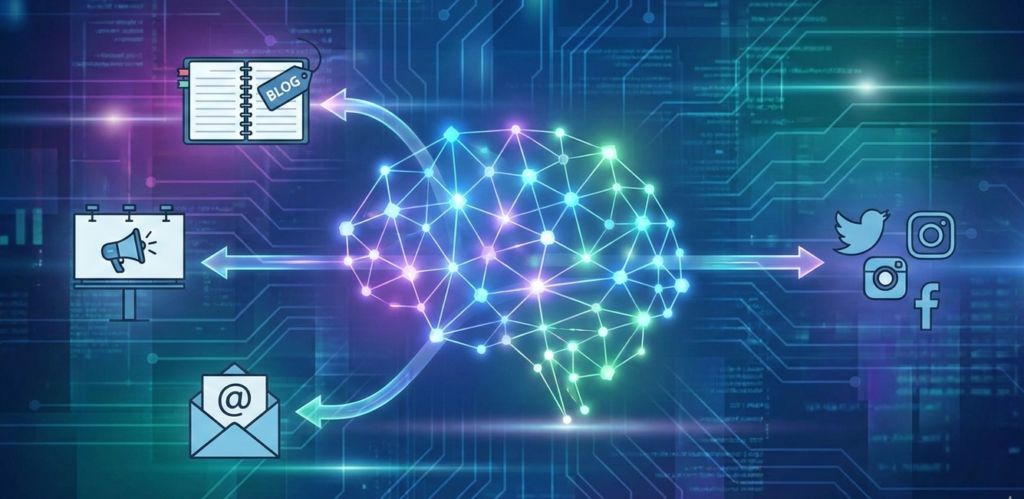
From writing blog posts and ad copy to designing visuals and personalizing customer journeys, generative AI is becoming deeply embedded in modern marketing workflows. Brands are using it to scale content production, deliver hyper-personalized experiences, and respond faster to changing consumer behavior. At the same time, marketers are learning that AI works best not as a replacement, but as a creative partner.
Here in this blog post, we’ll be exploring generative AI in marketing from every angle—what it is, why it matters, how it’s used, and where it’s headed. We’ll break down real-world use cases, practical examples, and strategic insights that marketers can actually apply. Whether you’re a solo content creator, a growth marketer, or leading a global brand, understanding generative AI is no longer optional. It’s quickly becoming the backbone of competitive marketing strategies.
Evolution of AI in the Marketing Landscape
The rise of generative AI didn’t happen overnight. It’s the result of years of technological evolution, experimentation, and gradual adoption within the marketing world. To truly understand its impact, it helps to look back at how AI has evolved in marketing over time.
Early Automation Tools
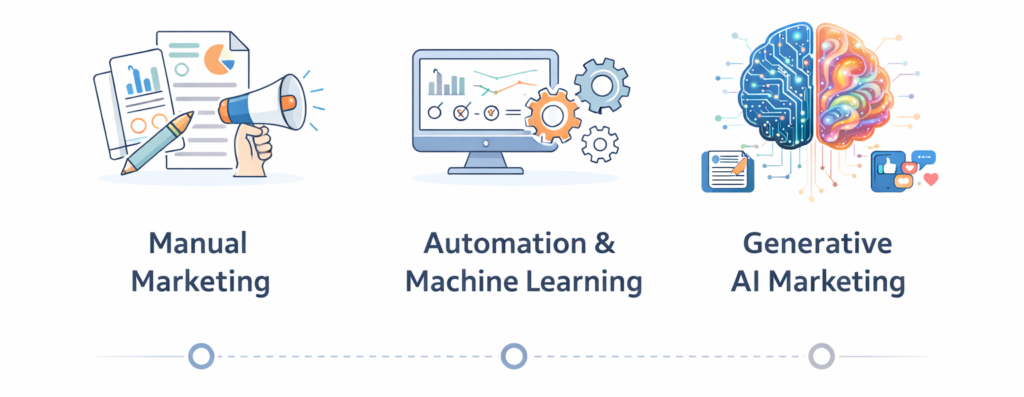
In the early days, AI in marketing was mostly about automation. Tools handled repetitive tasks like scheduling emails, segmenting audiences, or managing ad bids. These systems followed predefined rules—if a user clicks here, send this email; if a cart is abandoned, trigger that reminder. Useful, yes, but not exactly intelligent or creative.
Transition to Machine Learning
As machine learning gained traction, marketing tools became smarter. Instead of fixed rules, systems learned from data. Recommendation engines started suggesting products based on browsing behavior. Predictive analytics helped forecast churn or customer lifetime value. Marketers could finally make data-driven decisions at scale, but content creation still relied heavily on human input.
Rise of Generative Models
Then came generative AI, powered by advanced neural networks and large language models. This was the real game-changer. Suddenly, AI wasn’t just analyzing or predicting—it was creating. Marketers could generate entire articles, ad campaigns, visuals, and even videos with a few prompts. Creativity, once considered uniquely human, became something AI could assist with in meaningful ways.
This evolution reflects a broader shift in marketing—from manual execution to strategic orchestration. Today’s marketers are less like factory workers and more like conductors, guiding AI systems to produce, test, and optimize content at unprecedented speed. And as generative models continue to improve, their role in marketing will only deepen.
What Is Generative AI?
At its core, generative AI is a type of artificial intelligence designed to create new content rather than just process existing information. Unlike traditional AI systems that classify, predict, or recommend, generative AI produces original outputs that resemble human-created content.
Generative models are trained on vast datasets containing text, images, audio, or video. Through this training, they learn patterns, structures, and relationships within the data. When given a prompt, they use this learned knowledge to generate something new—whether that’s a blog paragraph, a product image, or a video script.
How Generative Models Work
Generative AI models use deep learning architectures, such as transformers or diffusion models, to understand context and generate coherent outputs. For example, a text-based model predicts the next word in a sequence based on the words that came before it. Over billions of parameters, this simple concept becomes incredibly powerful, enabling the model to write in different tones, styles, and formats.
Generative vs. Predictive AI
It’s important to distinguish generative AI from predictive AI. Predictive AI answers questions like, “What is likely to happen?” Generative AI answers, “What can I create?” In marketing, predictive AI might tell you which customers are most likely to convert, while generative AI creates the personalized message that convinces them to do so.
This creative capability is what makes generative AI so transformative for marketing. It turns data into stories, insights into experiences, and strategies into tangible assets—all at scale.
Why Generative AI Matters for Modern Marketing
Marketing today is a high-speed, high-volume game. Audiences expect personalized, relevant content across multiple channels, and they expect it now. Generative AI matters because it directly addresses these pressures while opening new creative possibilities.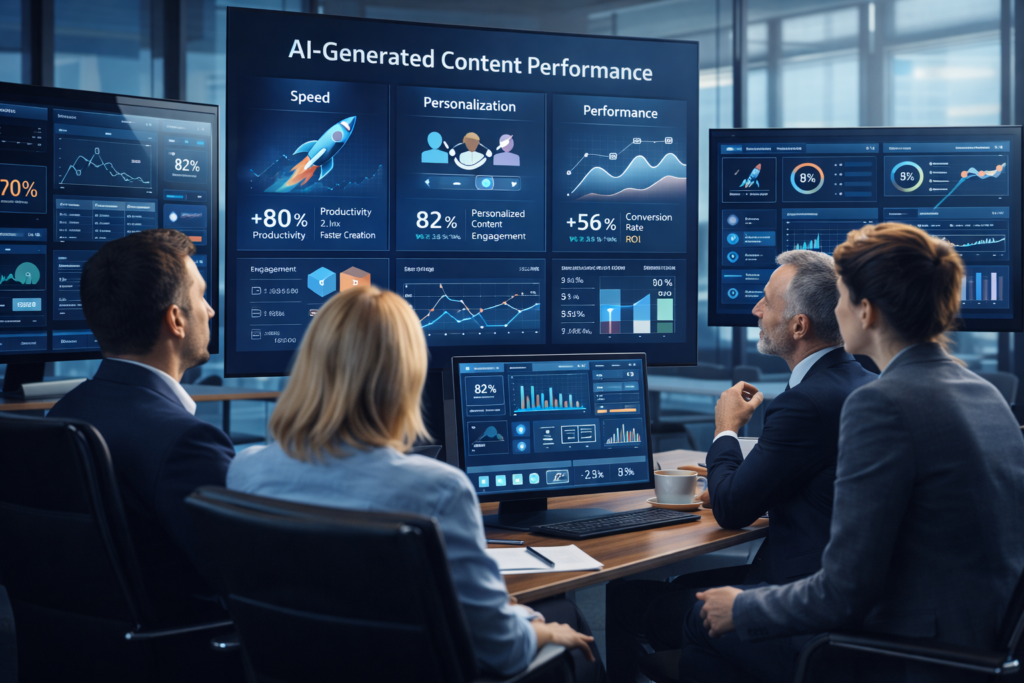
Speed and Scalability
One of the biggest advantages of generative AI is speed. What once took weeks—writing, designing, editing—can now be done in hours or even minutes. This allows marketing teams to respond quickly to trends, launch campaigns faster, and produce content at a scale that would be impossible manually.
Cost Efficiency
By automating parts of content creation, generative AI reduces production costs. Smaller teams can achieve what previously required large agencies. Budgets can be reallocated from repetitive tasks to strategy, experimentation, and creative direction.
Personalization at Scale
Perhaps the most powerful benefit is personalization. Generative AI can create thousands of content variations tailored to different audience segments, locations, behaviors, or stages in the buyer’s journey. Instead of one generic message, brands can deliver millions of personalized experiences without losing consistency.
In a world where attention is scarce and competition is fierce, generative AI gives marketers the tools to stand out—not by shouting louder, but by speaking more personally.
Key Types of Generative AI Used in Marketing
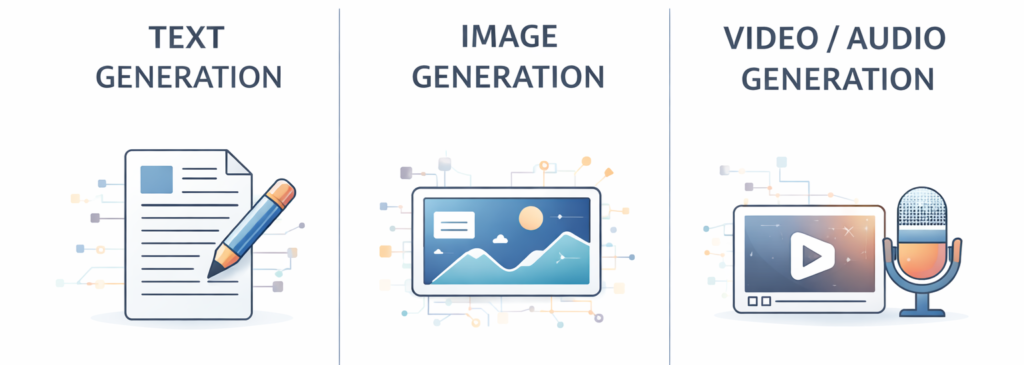
Generative AI isn’t a single technology. It’s a family of models and tools, each designed to create different types of content. Understanding these categories helps marketers choose the right solutions for their goals.
Text Generation Models
These are the most widely used in marketing. They generate blog posts, ad copy, emails, social media captions, scripts, and more. Text-based generative AI helps marketers maintain consistent messaging while adapting tone and style for different platforms.
Image Generation Models
Image-focused generative AI creates visuals from text prompts. Marketers use these tools to design ad creatives, social media images, product visuals, and concept art without relying solely on stock photos or designers.
Audio and Video Generation Models
Audio models can generate voiceovers, podcasts, and music, while video models create animations, explainer videos, and short-form clips. These tools are especially valuable for video-first platforms and immersive campaigns.
Together, these generative technologies enable truly multimedia marketing strategies, where text, visuals, and sound are all created and optimized through AI-driven workflows.
Content Creation with Generative AI
Content creation is where generative AI shines the brightest in marketing. It’s like having an always-on content studio that can brainstorm, draft, and refine ideas on demand. For marketers juggling multiple channels and deadlines, this is a game-changer.
Blog Writing and Long-Form Content

Generative AI helps marketers research topics, structure articles, and draft long-form content optimized for search engines. It can analyze top-ranking pages, identify relevant keywords, and suggest headings that improve readability and SEO performance. While human editing is still essential, AI dramatically speeds up the initial drafting process.
Social Media Posts and Captions
Social media thrives on consistency and creativity. Generative AI can produce daily posts, captions, hashtags, and even reply suggestions tailored to different platforms like Instagram, LinkedIn, or X. This allows brands to stay active and relevant without burning out their teams.
Email Marketing Campaigns
From subject lines to full email sequences, generative AI supports every stage of email marketing. It can adapt messaging based on user behavior, preferences, and engagement history, increasing open rates and conversions.
Product Descriptions
In e-commerce, generative AI creates compelling product descriptions at scale. It highlights features, benefits, and use cases while maintaining a consistent brand voice across thousands of listings.
Content creation is no longer just about writing—it’s about orchestrating ideas, data, and creativity. Generative AI makes that orchestration faster, smarter, and more scalable.
Personalization and Customer Experience
Personalization has always been the holy grail of marketing. Every brand wants to make customers feel seen, understood, and valued. The challenge has never been the desire—it’s been the scale. How do you create unique experiences for thousands or even millions of users without losing your sanity? This is where generative AI completely flips the script.
Generative AI enables dynamic personalization, meaning content can be created in real time based on user behavior, preferences, demographics, and intent. Instead of pre-writing dozens of variations, marketers can rely on AI to generate tailored messages on demand. Think of it like a digital concierge who knows exactly what each customer wants to hear, when they want to hear it, and how they want it delivered.
Dynamic Content Personalization
With generative AI, websites can display different headlines, product recommendations, and calls-to-action for different visitors. A first-time visitor might see educational content, while a returning customer sees product comparisons or limited-time offers. The content isn’t just selected—it’s created dynamically to match context.
AI-Driven Recommendations
Recommendation engines powered by generative AI go beyond “people also bought.” They explain why a product is relevant, generating short descriptions or narratives that feel personal and helpful. This storytelling element builds trust and increases conversion rates.
Conversational Marketing with Chatbots
AI-powered chatbots are no longer robotic or frustrating. Generative AI allows them to hold natural, human-like conversations, answer complex questions, and even guide users through purchasing decisions. They can adapt tone, language, and depth based on user behavior, creating a smoother and more satisfying customer journey.
At its core, generative AI helps brands move from mass marketing to meaningful conversations—and that’s where real loyalty is built.
Generative AI in Advertising and Creative Design
Advertising lives and dies by creativity. The problem? Creative fatigue. Audiences see thousands of ads every day, and stale messaging gets ignored fast. Generative AI gives advertisers a powerful antidote: infinite creative variations, produced quickly and tested intelligently.

Ad Copy Generation
Generative AI can create dozens—or hundreds—of ad copy variations for search, display, and social ads. Marketers can test different tones, hooks, emotional angles, and value propositions without starting from scratch each time. This dramatically improves click-through rates and reduces time spent on manual copywriting.
Visual Ad Creatives
Image generation tools allow marketers to create custom visuals aligned with campaign messaging. Want the same product showcased in different environments, seasons, or styles? Generative AI can do that without a full photoshoot. This is especially powerful for global campaigns where localization matters.
A/B Testing at Scale
Perhaps the most underrated benefit is scale testing. Instead of testing two versions of an ad, marketers can test dozens simultaneously. Generative AI helps identify winning combinations faster, allowing budgets to be allocated more efficiently.
Advertising becomes less about guessing and more about learning. Generative AI turns creative experimentation into a systematic, data-driven process—without killing creativity.
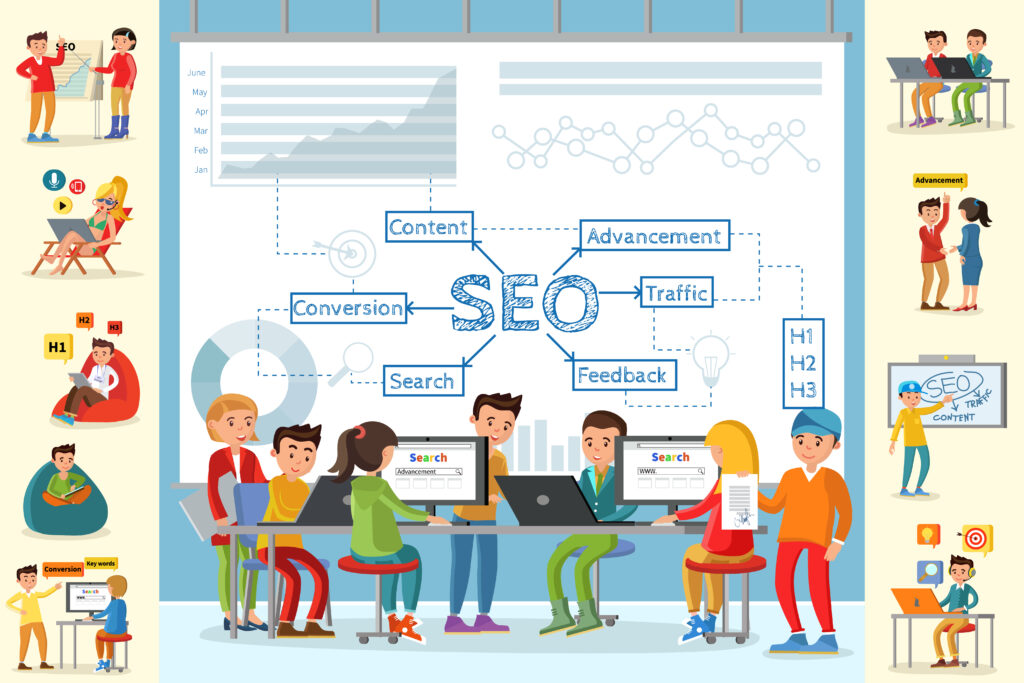
Search Engine Optimization (SEO) and Generative AI
SEO and generative AI are deeply intertwined. While AI doesn’t replace SEO strategy, it enhances nearly every part of the optimization process, making it faster, smarter, and more adaptable to search engine changes.
 Keyword Research Assistance
Generative AI can analyze search trends, user intent, and competitor content to suggest keyword clusters rather than just single keywords. This helps marketers build topic authority instead of chasing isolated terms.
Content Optimization
AI tools assist in optimizing headings, meta descriptions, internal linking, and content structure. They can suggest improvements for readability, semantic relevance, and featured snippet opportunities—all while maintaining a natural, human tone when guided properly.
SERP-Focused Content Strategies
By analyzing top-ranking pages, generative AI helps marketers understand what search engines reward. It can identify content gaps, suggest additional sections, and recommend formats like FAQs, tables, or lists that improve SERP visibility.
Used responsibly, generative AI doesn’t “game” search engines—it helps marketers create genuinely useful, well-structured content that aligns with user intent and SEO best practices.
Use Cases of Generative AI in Social Media Marketing
Social media is fast, noisy, and unforgiving. Miss a trend, and it’s gone. Post inconsistently, and engagement drops. Generative AI acts like a social media strategist, copywriter, and analyst rolled into one.
Content Calendars
Generative AI can build complete content calendars based on goals, platforms, and audience preferences. It suggests post ideas, formats, captions, and even optimal posting times.
Trend-Based Content
By analyzing trending topics and hashtags, AI can generate timely content ideas that align with brand voice. This allows brands to participate in conversations without sounding forced or outdated.
Influencer Collaboration Ideation
AI can help identify influencer partnership ideas, campaign themes, and co-created content concepts that align with both the brand and influencer audiences.
The result? Social media marketing that feels agile, relevant, and consistently creative—without exhausting human teams.
Email Marketing Automation with Generative AI
Email marketing remains one of the highest-ROI channels, and generative AI takes it to another level by making emails feel less automated and more human.
Subject Line Optimization
AI can generate and test multiple subject lines, optimizing for curiosity, urgency, or personalization. Even small improvements here can lead to significant gains in open rates.
Personalized Email Flows
Instead of static sequences, generative AI creates adaptive email journeys that change based on user behavior. The message evolves as the relationship deepens.
Behavioral Triggers
AI-generated emails can respond instantly to actions like browsing, abandoning a cart, or completing a purchase—using language that feels timely and relevant rather than generic.
Email becomes less about blasting messages and more about nurturing relationships—and generative AI makes that scalable.
E-commerce Marketing and Generative AI
E-commerce is one of the biggest beneficiaries of generative AI. From discovery to checkout, AI enhances nearly every touchpoint in the customer journey.
Product Recommendations
Generative AI doesn’t just recommend products—it explains them. Short narratives help customers understand why a product fits their needs, reducing friction and increasing confidence.
Visual Merchandising
AI-generated images and layouts allow brands to experiment with storefront designs, product displays, and seasonal themes without costly redesigns.
AI-Generated Reviews and Summaries
Generative AI can summarize thousands of reviews into concise insights, helping shoppers make faster decisions while building trust.
For e-commerce brands, generative AI is like adding a team of merchandisers, copywriters, and analysts overnight.
Real-World Examples of Generative AI in Marketing
Generative AI isn’t theoretical—it’s already shaping how brands compete.
Large global brands use AI to localize campaigns across regions, adapting language and visuals without losing brand consistency. Startups leverage AI to punch above their weight, producing high-quality marketing with limited resources.
Media companies use generative AI to personalize newsletters. SaaS companies generate tailored onboarding content. Retailers create dynamic product pages. Across industries, the pattern is clear: those who adopt thoughtfully move faster and connect better.
Challenges and Limitations of Generative AI in Marketing
Despite its power, generative AI isn’t magic. It comes with real challenges that marketers must navigate carefully.
 Data Privacy Concerns
Using customer data responsibly is critical. Marketers must ensure compliance with privacy regulations and avoid over-personalization that feels invasive.
Brand Voice Consistency
Without proper guidelines, AI-generated content can drift off-brand. Clear prompts, style guides, and human oversight are essential.
Ethical Considerations
Transparency matters. Audiences should feel informed, not deceived. Ethical use of generative AI builds trust instead of eroding it.
Best Practices for Using Generative AI in Marketing
The most successful marketers treat generative AI as a collaborator, not a shortcut.
-
Combine human creativity with AI efficiency
-
Review and refine AI-generated content
-
Align outputs with SEO and brand guidelines
-
Test, learn, and iterate continuously
When used strategically, generative AI amplifies human potential instead of replacing it.
Future of Generative AI in Marketing
The future points toward hyper-personalization, multimodal campaigns, and deeper integration between predictive and generative systems. Marketing will become more conversational, more adaptive, and more human—ironically, because of AI.
Brands that invest now won’t just keep up; they’ll define what marketing looks like next.
Conclusion
Generative AI in marketing isn’t a trend—it’s a transformation. It reshapes how content is created, how customers are engaged, and how brands grow. From personalization and SEO to advertising and e-commerce, its impact is both broad and deep.
The real advantage doesn’t come from using AI blindly, but from using it thoughtfully. When creativity, strategy, and technology work together, marketing becomes not just more efficient—but more meaningful.
FAQs
1. Is generative AI replacing marketers?
No. It enhances productivity and creativity, but human strategy and judgment remain essential.
2. Is generative AI safe for SEO?
Yes, when used responsibly with quality control and user-focused content.
3. Can small businesses use generative AI?
Absolutely. It levels the playing field by reducing costs and scaling output.
4. How do you maintain brand voice with AI?
By using clear guidelines, prompts, and consistent human review.
5. What’s the biggest benefit of generative AI in marketing?
Personalization at scale without sacrificing speed or creativity.