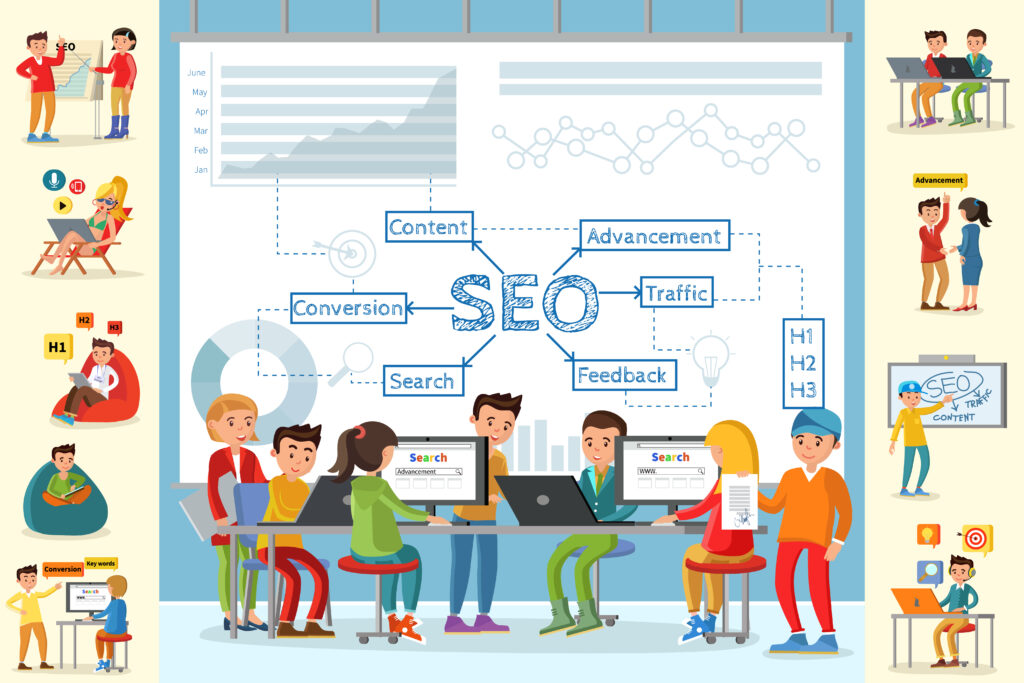
Digital Marketing Audit
A digital marketing audit is like a full-body health check for your online presence. You might feel like everything is working fine on the surface—traffic is coming in, ads are running, social posts are going out—but beneath that surface, there could be leaks silently draining your budget, visibility, and growth potential. A proper audit doesn’t just tell you what’s broken; it shows you what’s working, what’s underperforming, and where the real opportunities are hiding.

Think of it as stepping back and looking at your entire digital ecosystem with a sharp, unbiased lens. From your website’s technical foundation to your content strategy, SEO performance, paid ads, social media, and analytics setup—everything gets examined. The goal isn’t to criticize past efforts but to create clarity and direction moving forward.
In today’s hyper-competitive digital landscape, guessing is expensive. Algorithms change, user behavior evolves, and platforms constantly update their rules. A digital marketing audit helps you adapt instead of react. It turns scattered data into actionable insights and transforms random tactics into a cohesive strategy.
This guide walks you through a complete digital marketing audit, step by step, in plain language. Whether you’re a business owner, marketer, or strategist, you’ll learn how to evaluate performance, uncover hidden gaps, and build a smarter, more profitable digital marketing strategy that actually aligns with your business goals.
Understanding the Concept of a Digital Marketing Audit
At its core, a digital marketing audit is a systematic evaluation of all your online marketing activities. It’s not just about SEO or ads or social media in isolation—it’s about how all these pieces work together as one machine. When one cog is misaligned, the entire system suffers.
A proper audit examines multiple layers: technical infrastructure, traffic sources, content quality, user experience, conversion paths, and data accuracy. It asks tough questions like: Are we attracting the right audience? Are we delivering the right message? Are we converting visitors efficiently? And most importantly—are our efforts generating a measurable return?
Unlike a quick performance report, an audit is deep and diagnostic. It looks at trends over time, not just snapshots. It compares intent versus execution and strategy versus results. For example, you might discover that while your website traffic is growing, conversions are declining due to poor mobile usability or unclear calls to action.
Another key aspect of a digital marketing audit is alignment. Many businesses run campaigns across multiple channels without a unified strategy. The audit reveals inconsistencies in branding, messaging, and targeting that dilute impact. When everything aligns—from keywords to landing pages to email follow-ups—results compound.
In short, a digital marketing audit transforms chaos into clarity. It replaces assumptions with evidence and gives you a roadmap for smarter decisions instead of reactive fixes.
Why a Digital Marketing Audit Is Critical for Business Growth
Growth without direction is dangerous. You might spend more, publish more, and post more—yet see diminishing returns. That’s where a digital marketing audit becomes essential. It helps you grow smarter, not louder.
One of the biggest benefits of an audit is cost efficiency. Many businesses waste significant budgets on underperforming channels simply because “that’s how it’s always been done.” An audit highlights which channels actually drive ROI and which ones are just burning cash. This alone can dramatically improve profitability without increasing spend.
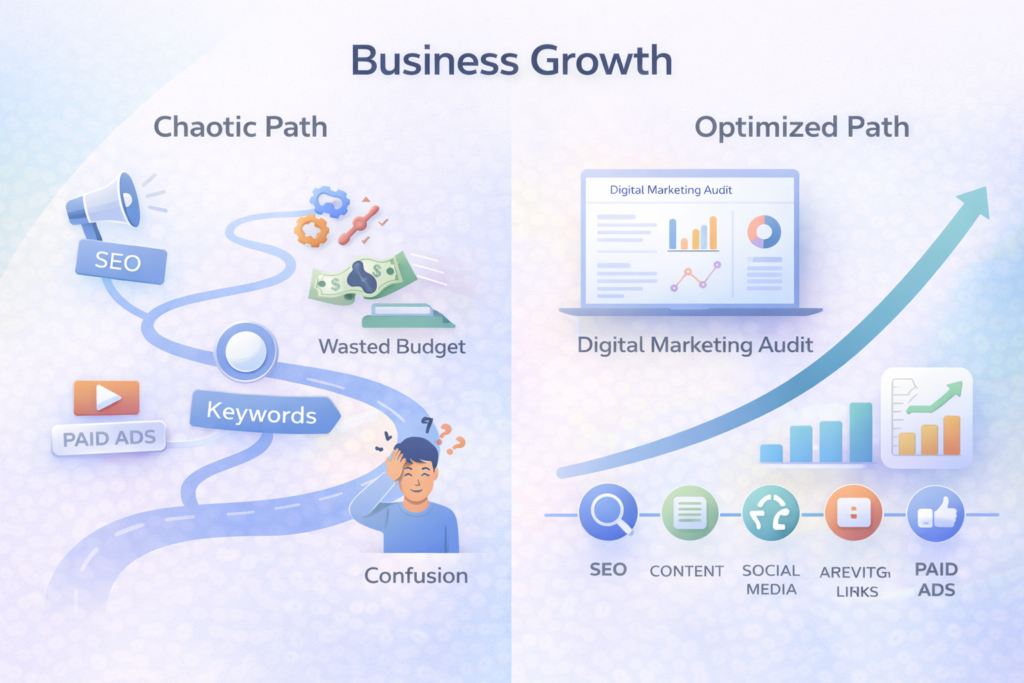
Another reason audits matter is adaptability. Search engines, social platforms, and ad networks evolve constantly. What worked a year ago may now be ineffective—or even harmful. A regular audit ensures your strategies stay aligned with current best practices and platform guidelines.
Audits also uncover missed opportunities. You might rank on page two for high-intent keywords, have under-optimized content that could easily perform better, or ignore profitable audience segments in your paid campaigns. These are low-hanging fruits that often deliver quick wins.
Most importantly, a digital marketing audit creates strategic focus. Instead of chasing every new tactic, you gain clarity on what truly moves the needle for your business. That focus is what turns marketing from an expense into a growth engine.
Setting Clear Goals and KPIs Before Starting the Audit
Before diving into data, tools, and reports, you need clarity on one thing: what success actually looks like. Without clear goals and KPIs, a digital marketing audit becomes a random collection of observations instead of a strategic evaluation.
Start by defining your primary business objectives. Are you aiming for more leads, higher sales, increased brand awareness, or customer retention? Each goal requires different metrics and evaluation criteria. For example, an e-commerce brand might prioritize conversion rate and average order value, while a B2B company may focus on lead quality and cost per acquisition.
Once goals are clear, translate them into measurable KPIs. These could include organic traffic growth, keyword rankings, bounce rate, conversion rate, email open rates, ROAS, or customer lifetime value. The key is relevance—KPIs must directly connect to business outcomes, not vanity metrics.
This step also helps prevent analysis paralysis. When you know what matters most, you can filter out noise and focus on insights that drive action. For instance, social media engagement might look impressive, but if it doesn’t contribute to conversions or brand authority, its value should be questioned.
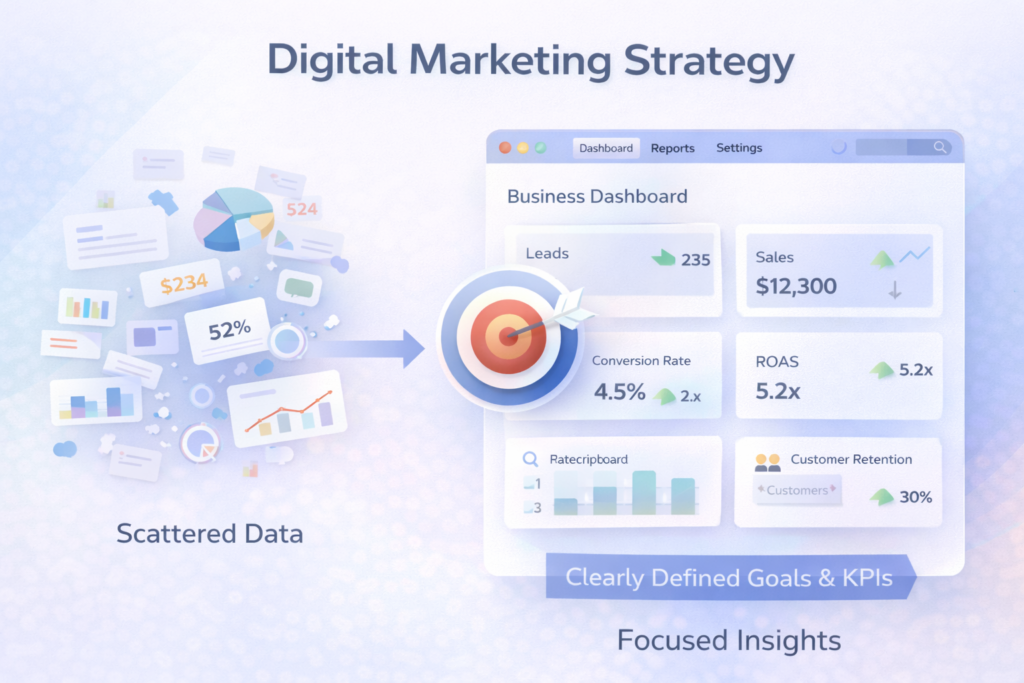
Clear goals act as a compass throughout the audit process. They ensure every insight leads toward a defined destination instead of scattered improvements with no real impact.
Website Performance and Technical SEO Evaluation
Your website is the foundation of your digital marketing efforts. If it’s slow, unstable, or technically flawed, everything built on top of it suffers. A website performance and technical SEO audit ensures your foundation is solid.
Start with site speed. Page load time directly affects user experience, bounce rates, and search rankings. Even a one-second delay can significantly reduce conversions. Tools like PageSpeed Insights and Lighthouse reveal issues like unoptimized images, render-blocking scripts, and poor server response times.
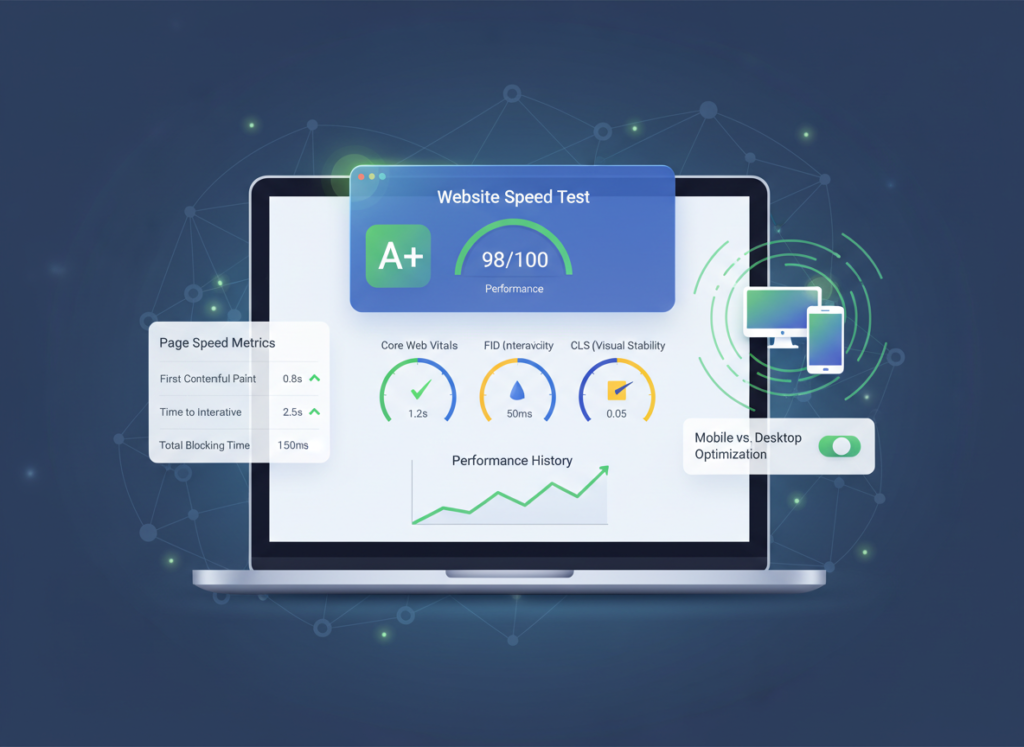
Next, evaluate mobile performance. With mobile-first indexing, search engines primarily use the mobile version of your site for ranking. A site that looks great on desktop but struggles on mobile is a silent ranking killer. Check responsiveness, font sizes, button spacing, and mobile navigation flow.
Technical SEO also includes crawlability and indexation. Broken links, redirect chains, duplicate content, and incorrect canonical tags confuse search engines and dilute authority. A clean site structure with proper internal linking helps search engines understand and rank your content effectively.
Security is another crucial factor. HTTPS is no longer optional—it’s a trust signal for both users and search engines. Any technical audit should flag security warnings, outdated plugins, or vulnerabilities.
When your website performs smoothly, everything else—SEO, ads, content, and conversions—works better. It’s like tuning an engine before expecting peak performance.
On-Page SEO Audit and Content Optimization
On-page SEO is where relevance meets intent. It’s not just about inserting keywords—it’s about delivering exactly what users are searching for in the clearest, most helpful way possible.
Begin by analyzing keyword usage. Are your pages targeting the right keywords based on search intent? Many sites rank poorly because they target high-volume keywords without matching user expectations. Informational queries need educational content, while transactional queries require clear offers and CTAs.
Next, assess title tags and meta descriptions. These elements influence click-through rates directly. They should be compelling, accurate, and optimized without sounding robotic. A well-written meta description acts like an ad for your page in search results.
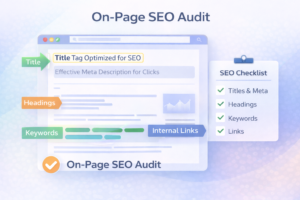
Content quality is where most on-page audits reveal major gaps. Thin, outdated, or generic content struggles to compete. Search engines reward depth, originality, and usefulness. Each page should answer questions thoroughly, provide unique insights, and guide users naturally toward the next step.
Internal linking is another overlooked factor. Strategic internal links distribute authority, improve crawlability, and keep users engaged longer. Pages shouldn’t exist in isolation—they should be part of a connected content ecosystem.
An effective on-page SEO audit transforms content from “just existing” into actively working for rankings, traffic, and conversions.
Off-Page SEO Audit and Backlink Profile Analysis
Off-page SEO is largely about trust and authority. Search engines view backlinks as votes of confidence, but not all votes carry the same weight. A backlink audit helps you understand how your site is perceived across the web.
Start by analyzing backlink quantity and quality. A smaller number of high-authority, relevant links often outweighs hundreds of low-quality ones. Toxic or spammy backlinks can harm rankings and even trigger penalties.
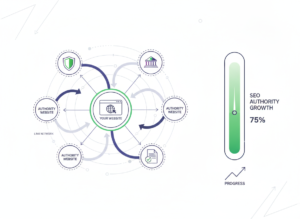 Look at anchor text distribution. Over-optimized anchors can appear manipulative, while natural, branded anchors signal authenticity. A healthy profile includes a mix of branded, generic, and contextual anchors.
Competitor backlink analysis is also powerful. By comparing your profile to top-ranking competitors, you can identify link-building opportunities, content gaps, and industry partnerships worth pursuing.
Off-page SEO isn’t just about links—it also includes brand mentions, reviews and digital PR. These signals build credibility and reinforce your brand’s authority in your niche.
A clean, strong backlink profile acts like social proof for search engines, making it easier for your content to rank and stay ranked.
Content Marketing Audit
A content marketing audit goes far beyond counting blog posts or checking publication dates. It’s about understanding whether your content truly serves your audience and supports your business goals. Content should attract, educate, persuade, and convert—not just exist for the sake of consistency.
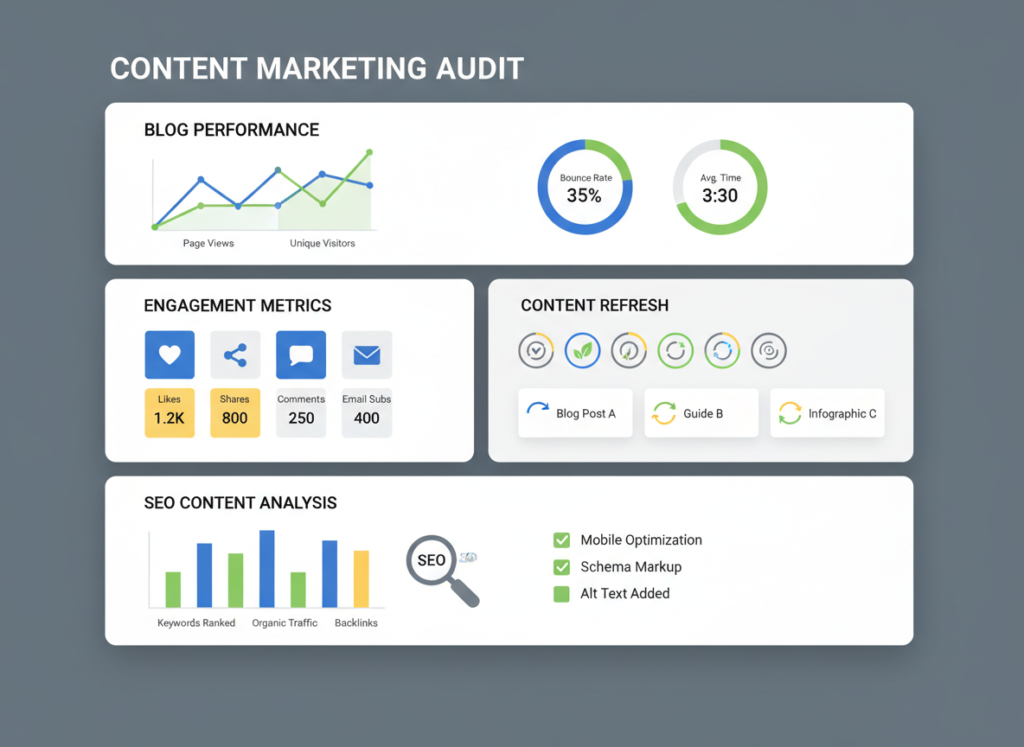
Start by taking inventory of all your content assets: blog posts, landing pages, ebooks, videos, case studies, and guides. Then analyze performance metrics such as organic traffic, engagement time, bounce rate, social shares, and conversions. This reveals which pieces are pulling their weight and which ones are quietly underperforming.
One common issue uncovered during audits is content decay. Articles that once performed well may lose rankings due to outdated information, increased competition, or shifting search intent. Refreshing and expanding these pieces often delivers faster results than creating new content from scratch.
Another critical aspect is topical authority. Are you covering subjects deeply enough to be seen as an expert, or are you skimming the surface across too many topics? Search engines reward depth and consistency. A strong audit identifies content gaps—important questions your audience is asking that you haven’t answered yet.
Finally, review content alignment with the buyer’s journey. Awareness content should educate, consideration content should compare and guide, and decision-stage content should persuade. When content matches intent at every stage, conversions feel natural instead of forced.
Social Media Marketing Audit
A social media audit helps you understand whether your platforms are building real connections or just generating noise. Posting frequently doesn’t guarantee results—strategy and consistency matter far more.
 Begin by reviewing platform performance individually. Each channel serves a different purpose. LinkedIn might drive B2B leads, Instagram may boost brand awareness, while Facebook could support community engagement. Compare reach, engagement, follower growth, and referral traffic for each platform.
Content consistency is another key area. Are visuals, tone, and messaging aligned with your brand identity? Inconsistent branding confuses audiences and weakens trust. A strong audit ensures your brand voice feels familiar across all channels.
Engagement quality matters more than raw numbers. A thousand likes mean little if there are no comments, shares, or conversations. Analyze what types of posts spark interaction and which ones fall flat. This insight shapes future content strategy.
Also review posting frequency and timing. Many brands either post too much and burn out their audience, or post too little and lose relevance. A balanced, data-backed schedule maximizes visibility without overwhelming followers.
A social media audit transforms platforms from time-consuming tasks into strategic brand-building tools.
Paid Advertising Audit (PPC and Display Campaigns)
Paid advertising can drive fast results—but it can also drain budgets quickly if unmanaged. A paid ads audit focuses on efficiency, relevance, and return on investment.
Start by reviewing campaign structure. Well-organized campaigns with tightly themed ad groups perform better and are easier to optimize. Messy structures often lead to wasted spend and unclear insights.
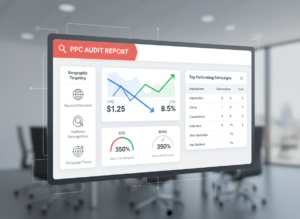 Next, analyze targeting settings. Are ads reaching the right audience segments based on demographics, interests, intent, and location? Broad targeting may increase impressions but lower conversions. Precision targeting improves relevance and reduces cost per acquisition.
Ad creative and messaging deserve close attention. Are headlines clear and compelling? Do visuals align with the offer? Ad fatigue is common—running the same creative for too long reduces effectiveness. Audits often reveal the need for fresh variations.
Landing page alignment is crucial. Even the best ad fails if the landing page doesn’t deliver on the promise. Message mismatch, slow load times, or unclear CTAs kill conversions instantly.
Finally, review key metrics like CTR, CPC, conversion rate, and ROAS. The goal isn’t just clicks—it’s profitable growth. A solid audit ensures every dollar works harder.
Email Marketing Audit
Email marketing remains one of the highest ROI channels—but only when done right. An email audit evaluates deliverability, engagement, and conversion performance.
Begin with list health. Are subscribers active and opted-in, or is the list bloated with inactive contacts? Poor list quality hurts deliverability and skews performance metrics. Regular cleaning improves results instantly.
Next, analyze open rates and click-through rates. Low opens may indicate weak subject lines or poor send timing. Low clicks suggest unclear messaging or irrelevant offers. Segmenting audiences often solves both issues.
Content relevance is another major factor. Emails should feel personal, timely, and valuable—not generic blasts. Audits often reveal opportunities for personalization, automation, and behavioral triggers.
Also review automation workflows. Welcome sequences, abandoned cart emails, and re-engagement campaigns should run smoothly and align with user behavior. Broken or outdated automations leave money on the table.
An effective email audit turns inbox messages into meaningful conversations that nurture trust and drive conversions consistently.
Conversion Rate Optimization (CRO) Audit
Traffic alone doesn’t grow businesses—conversions do. A CRO audit focuses on how users interact with your site and where friction blocks them from taking action.
Start by analyzing user behavior through heatmaps, session recordings, and funnel reports. These tools reveal where users hesitate, scroll, or abandon pages. Often, small changes produce big wins.
Review calls to action carefully. Are they clear, visible, and compelling? Vague CTAs like “Learn More” often underperform compared to action-driven language that sets expectations.
Form optimization is another critical area. Long, complex forms discourage completion. A CRO audit evaluates field count, layout, trust signals, and error handling to reduce friction.
Trust elements matter more than many realize. Testimonials, reviews, security badges, and clear policies reassure users and boost confidence. Their absence can silently kill conversions.
A CRO audit ensures that every visitor has a smooth, intuitive path from interest to action.
Analytics, Tracking, and Data Accuracy Review
Decisions are only as good as the data behind them. An analytics audit ensures your tracking setup is accurate, reliable, and aligned with business goals.
Start by reviewing analytics configuration. Are tracking codes installed correctly across all pages? Missing or duplicated tags lead to inaccurate data and flawed insights.
Goal and event tracking is essential. Page views alone don’t tell the full story. Form submissions, purchases, downloads, and key interactions should be tracked precisely.
Cross-platform consistency also matters. Data from analytics tools, ad platforms, and CRM systems should align. Discrepancies often signal tracking errors or attribution issues.
Privacy and compliance cannot be ignored. Cookie consent, data retention policies, and anonymization settings must align with regulations. Trust and transparency protect both users and brands.
A clean analytics setup turns raw data into confident decision-making power.
Competitor Digital Marketing Audit
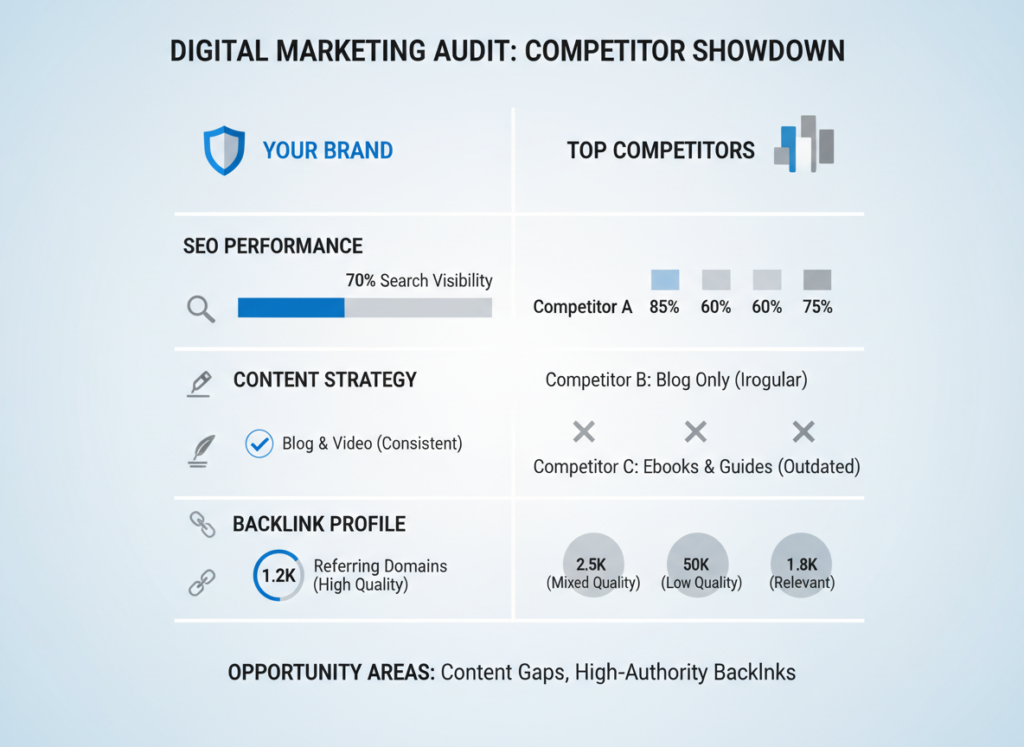
A competitor audit provides context. It shows what’s possible, what’s working in your industry, and where you can differentiate.
Analyze competitors’ SEO strategies—keywords, content depth, backlink sources, and site structure. This reveals gaps you can exploit and standards you must meet.
Review their content formats and publishing frequency. Are they investing in guides, videos, or tools? Understanding this helps you stay competitive without copying blindly.
Paid ads and messaging also offer insight. Competitors’ headlines, offers, and landing pages reveal what resonates with shared audiences.
The goal isn’t imitation—it’s strategic advantage. A competitor audit helps you position smarter and stronger.
Identifying Gaps, Risks, and Missed Opportunities
Once all channels are reviewed, patterns emerge. Gaps become visible. Risks surface. Opportunities stand out.
Common gaps include weak content clusters, underutilized channels, or broken conversion paths. Risks may involve overdependence on one traffic source or outdated tactics.
Opportunities often hide in plain sight—pages ranking just outside page one, campaigns with high CTR but low conversion, or content with engagement but no CTA.
This phase turns analysis into insight and prepares the ground for action.
Action Plan and Prioritization Framework
An audit without action is wasted effort. The final step is turning insights into a prioritized action plan.
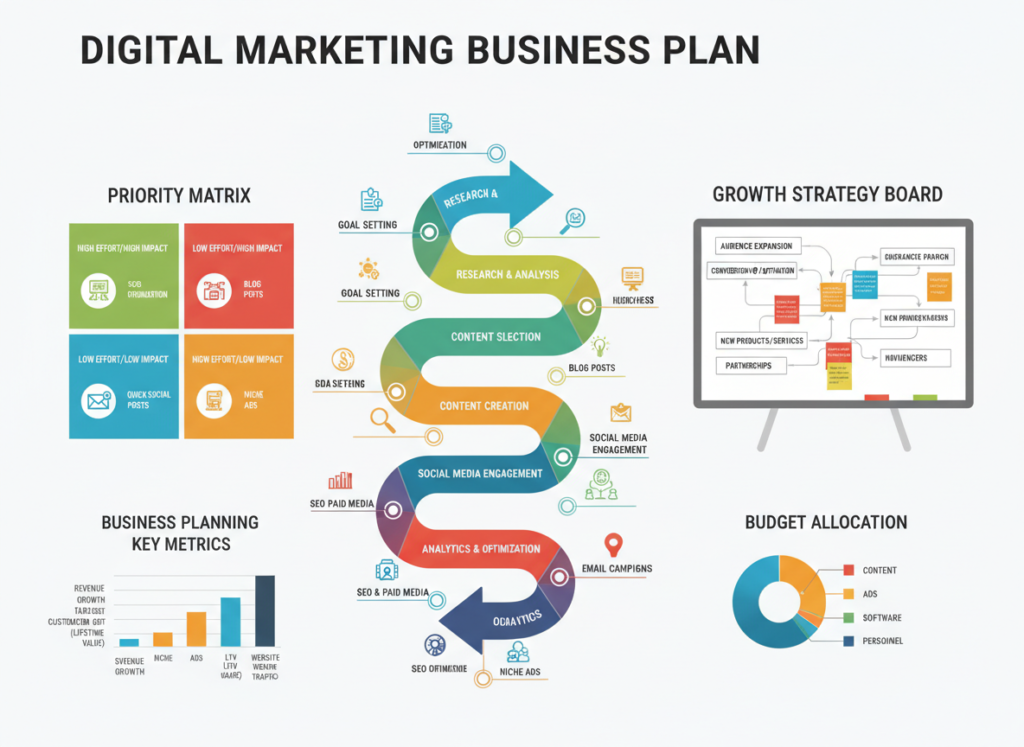
Categorize tasks by impact and effort. Quick wins come first—low effort, high impact changes. Long-term initiatives follow with clear timelines and ownership.
Set benchmarks and track progress. Improvement should be measurable and continuous, not a one-time fix.
A clear action plan transforms the audit into momentum.
Tools Required for a Professional Digital Marketing Audit
Effective audits rely on the right tools. SEO platforms, analytics tools, CRO software, and social media insights all play a role.
The key isn’t using many tools—it’s using them correctly and interpreting data intelligently.
👉Find all types of tools that best suits for your regular digital needs.
Common Digital Marketing Audit Mistakes to Avoid
Traffic alone doesn’t define success. Focus on meaningful metrics, audit with a unified view and turn every insight into action.
An audit’s value lies in execution.
Future-Proofing Your Digital Marketing Strategy
Regular audits, adaptability and user-centric thinking future-proof your strategy. Trends change, but fundamentals endure.
Stay curious. Stay data-driven. Stay human.
Conclusion
A digital marketing audit isn’t a one-time task—it’s a strategic habit. It brings clarity, efficiency, and direction to your online efforts. When done thoroughly, it transforms scattered tactics into a unified growth strategy that delivers consistent, measurable results.