Digital Marketing for Ecommerce Business
Digital marketing for an ecommerce business isn’t just a fancy buzzword anymore—it’s the backbone of online selling. If you’re running an ecommerce store and relying only on good-looking products or competitive pricing, you’re leaving money on the table. Think of digital marketing as the engine of your online store. Without it, even the best-designed e-commerce website is like a sports car without fuel.
For beginners, digital marketing may feel overwhelming. For intermediate users, it can feel scattered. And for advanced marketers, the challenge is staying ahead of trends. No matter where you stand, this guide is designed to walk you through every critical aspect of digital marketing for ecommerce business in a clear, human, and practical way.
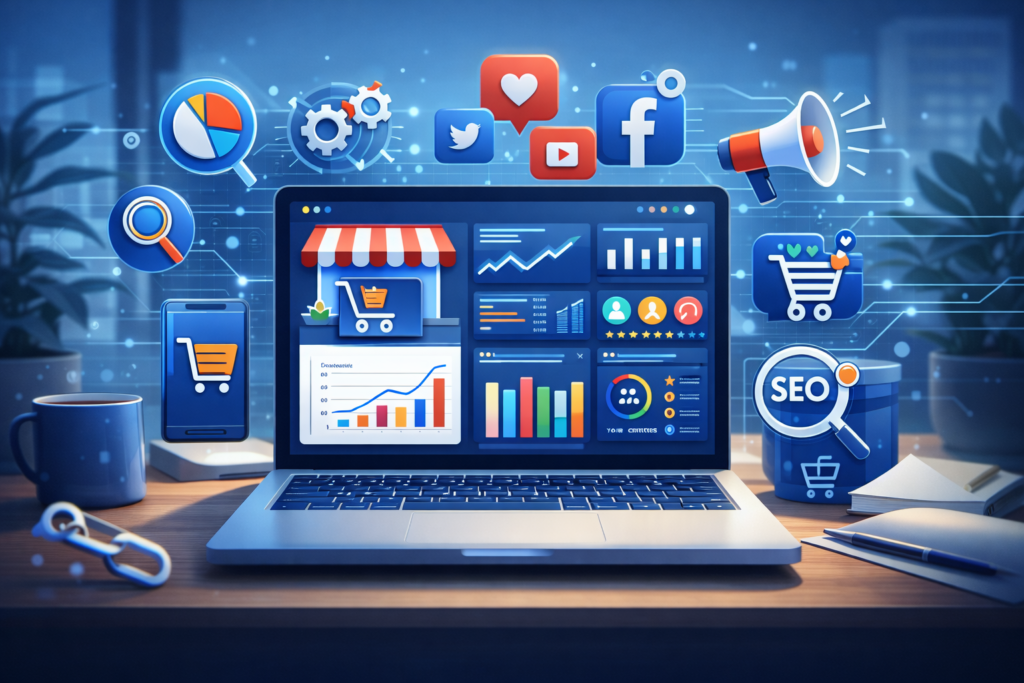
Ecommerce digital marketing is about reaching the right audience, at the right time, with the right message. It’s not about shouting louder—it’s about being smarter. From search engines and social media to email campaigns and paid ads, every channel plays a unique role in driving traffic, building trust, and converting visitors into loyal customers.
This blog post covers everything from foundational concepts to advanced strategies. Whether you’re launching your first online store or scaling an established brand, you’ll find actionable insights that you can apply immediately.
Understanding E-commerce Digital Marketing Ecosystem
Before diving into tactics, it’s important to understand the ecosystem of digital marketing for ecommerce business. Imagine it as a living system where traffic sources, customer behavior, content, and data all interact.
Online Consumer Behavior
Today’s ecommerce customers are smarter than ever. They compare prices, read reviews, watch product videos, and follow brands on social media before making a purchase. They don’t buy on impulse alone; they buy on trust. Digital marketing helps you build that trust across multiple touchpoints.
Customers may discover your product through a Google search, see a retargeting ad on Instagram, read your blog, and finally purchase through an email offer. Every step matters, and missing one can break the chain.
Ecommerce Sales Funnel
The ecommerce funnel includes awareness, consideration, conversion, and retention. Digital marketing strategies align with each stage. SEO and social media build awareness, content and email marketing support consideration, paid ads push conversions, and loyalty campaigns drive retention.
Understanding this ecosystem allows you to market with intention instead of guesswork.
Why Digital Marketing Is Crucial for Ecommerce Success
Digital marketing for ecommerce business is no longer optional—it’s survival. With thousands of online stores competing for attention, visibility is everything. Digital marketing gives your store a voice in a crowded marketplace.
First, it levels the playing field. A small ecommerce brand with smart digital marketing can outperform a big brand with poor strategy. Second, it’s measurable. Unlike traditional marketing, you can track clicks, conversions, and ROI in real time.
Digital marketing also allows personalization. You can target users based on behavior, interests, location, and even past purchases. This level of precision increases conversions and reduces wasted ad spend.
Most importantly, digital marketing builds long-term growth. SEO content brings traffic for years. Email lists become owned assets. Social media communities turn customers into advocates. It’s not just about sales—it’s about building a brand.
Core Components of Digital Marketing for Ecommerce Business
Search Engine Optimization (SEO)
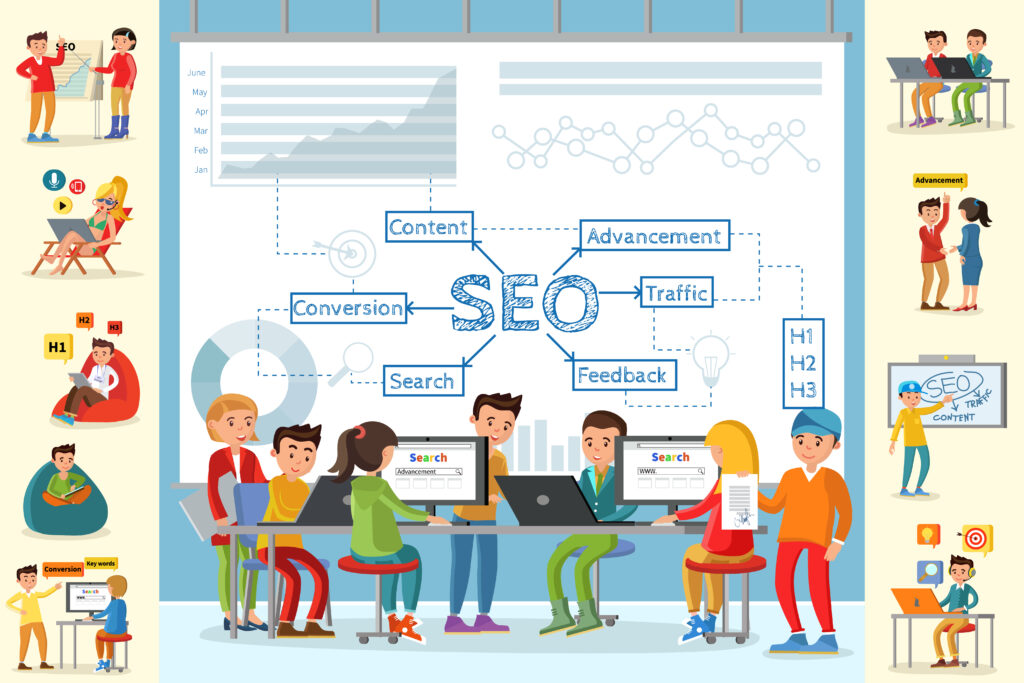
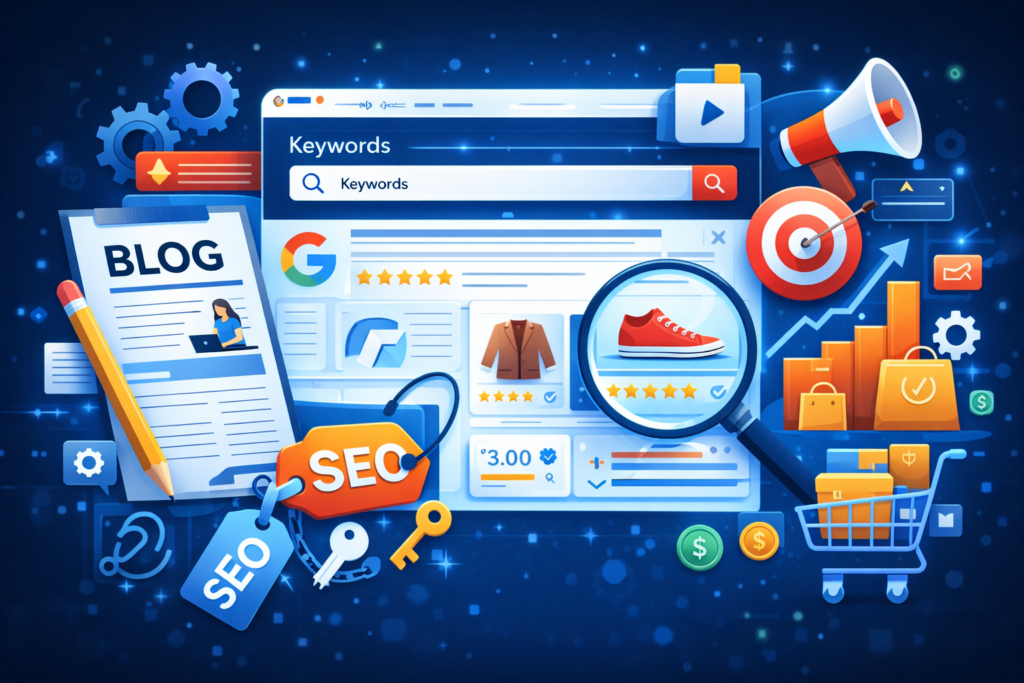
SEO is the foundation of digital marketing for ecommerce business. It helps your products and pages appear when users search on Google. Without SEO, you rely heavily on paid ads, which can get expensive.
Content Marketing
Content educates, entertains, and builds trust. Blogs, videos, guides, and FAQs help customers make informed decisions while boosting SEO.
Social Media Marketing
Social media humanizes your brand. It allows interaction, storytelling, and community building while driving traffic to your ecommerce store.
Email Marketing
Email remains one of the highest ROI channels. It’s personal, direct, and perfect for promotions, product launches, and retention.
SEO for Ecommerce Business
SEO deserves special attention because it drives high-intent traffic. People searching for products are already interested—you just need to show up.
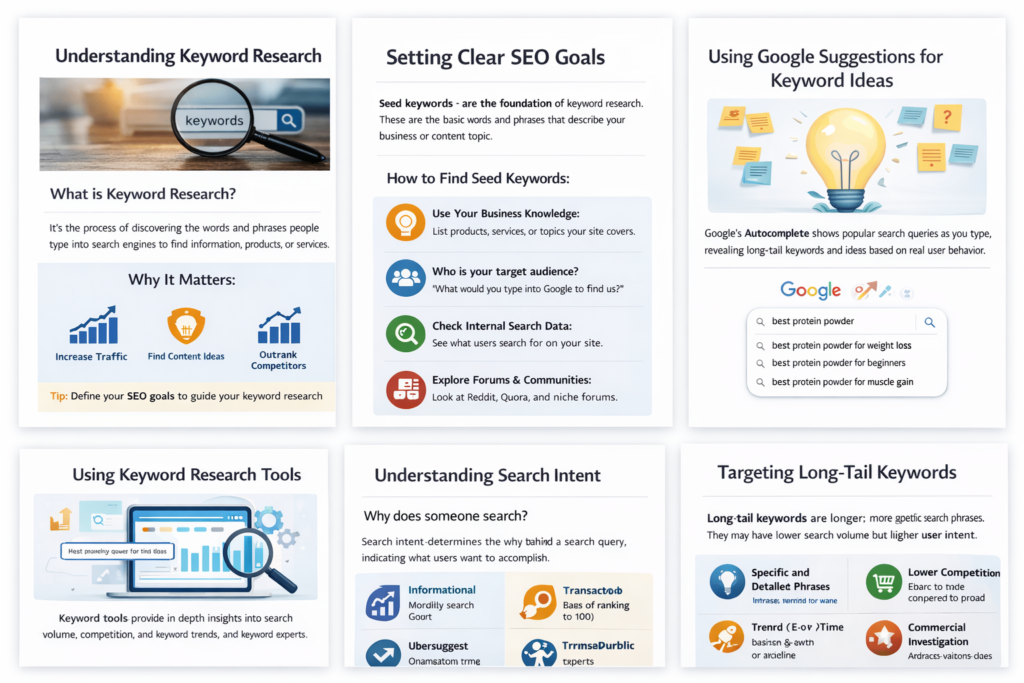
Keyword Research for Ecommerce
Start by identifying keywords with buying intent. These include product-specific, category-based, and long-tail keywords. Tools like Google Keyword Planner, Ahrefs, and SEMrush help find profitable terms.
👉Learn More About Keyword Research and Its Importance
On-Page SEO for Product Pages
Optimize product titles, meta descriptions, URLs, images, and descriptions. Use keywords naturally. Focus on benefits, not just features. Answer common customer questions directly on the page.
Technical SEO Essentials
Site speed, mobile optimization, clean structure, and secure HTTPS are non-negotiable. A slow or broken site kills conversions and rankings.
Content Marketing Strategies for Ecommerce
Content is the bridge between traffic and trust.
Blogging for Ecommerce Growth
Blogs attract organic traffic and educate users. Write buying guides, comparisons, how-to articles, and trend pieces related to your niche.
Product Descriptions That Sell
Avoid generic descriptions. Write like you’re talking to a real person. Use storytelling, sensory language, and social proof to make products irresistible.
Social Media Marketing for Ecommerce Business
Social media platforms are digital storefronts. The key is choosing the right ones.
Choosing the Right Platforms
Instagram and TikTok work great for visual products. Facebook is ideal for communities and ads. LinkedIn suits B2B ecommerce.
Organic vs Paid Social Media
Organic builds relationships; paid drives fast results. A balanced approach ensures sustainable growth.
Paid Advertising for Ecommerce
Paid ads accelerate results when used wisely.
Google Ads for Ecommerce
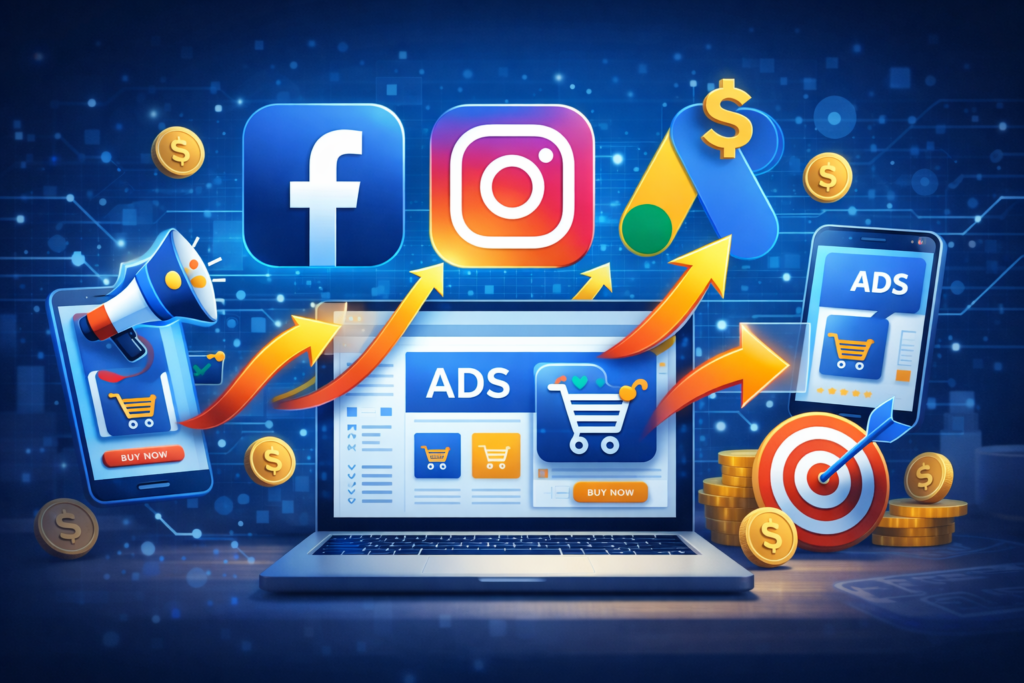
Google Shopping and search ads capture high-intent buyers. Optimize product feeds and landing pages for better ROI.
Social Media Ads
Retarget visitors, upsell existing customers, and test creatives. Data-driven testing is the secret sauce.
Email Marketing for Ecommerce Business
Email marketing nurtures relationships beyond the first sale.
Building an Email List
Offer discounts, free guides, or early access. Make sign-ups easy and valuable.
Automation and Personalization
Automated flows like abandoned cart emails and personalized product recommendations significantly boost revenue.
Conversion Rate Optimization (CRO)
Driving traffic is useless if visitors don’t convert. CRO focuses on improving user experience, page layout, CTAs, and trust signals. Small tweaks can lead to massive revenue gains.
Analytics and Tracking Performance
Data is your compass. Tools like Google Analytics, Google Search Console, and heatmaps help you understand what’s working and what’s not. Track KPIs like traffic, conversion rate, customer acquisition cost, and lifetime value.
Advanced Digital Marketing Strategies for Ecommerce
AI and Automation
AI-driven chatbots, predictive analytics, and personalized recommendations enhance customer experience and efficiency.
Omnichannel Marketing
Customers move across devices and platforms. Omnichannel strategies ensure consistent messaging everywhere.
Common Mistakes to Avoid in Ecommerce Digital Marketing
Ignoring SEO, chasing every trend, neglecting email marketing, and not tracking data are common pitfalls. Focus on fundamentals before scaling advanced tactics.
Future Trends in Digital Marketing for Ecommerce Business
Voice search, video commerce, influencer partnerships, and AI personalization are shaping the future. Staying adaptable is key.
Conclusion
Digital marketing for ecommerce business is a journey, not a one-time setup. From SEO and content to social media and analytics, every piece plays a role in sustainable growth. Whether you’re a beginner learning the basics or an advanced marketer refining strategies, the goal remains the same—deliver value, build trust, and grow profitably. Master the fundamentals, experiment intelligently, and always keep the customer at the center.