How to Rank in Google’s New AI-Driven SERP
Google search is no longer just a list of ten blue links neatly stacked on a page. If you’ve searched anything recently, you’ve probably noticed something different—answers appearing instantly, summaries generated by AI, fewer clicks, and more decisions made before users ever reach a website. Welcome to Google’s AI-driven SERP, where artificial intelligence doesn’t just rank content—it interprets, rewrites, summarizes, and sometimes replaces it.
Ranking in this new environment feels a bit like trying to have a conversation with a very intelligent but very picky librarian. It doesn’t just want information; it wants understanding. It wants context, credibility, clarity, and usefulness wrapped in a human-friendly package. The old SEO playbook—stuffing keywords, chasing backlinks, publishing thin articles—simply doesn’t cut it anymore.
In this guide, we’re diving deep into how to rank in Google’s new AI-driven SERP by aligning your content with how Google’s AI thinks, learns, and serves information. This isn’t about gaming the system. It’s about becoming the best possible answer.
Understanding the Evolution of Google SERP: From Blue Links to AI Answers
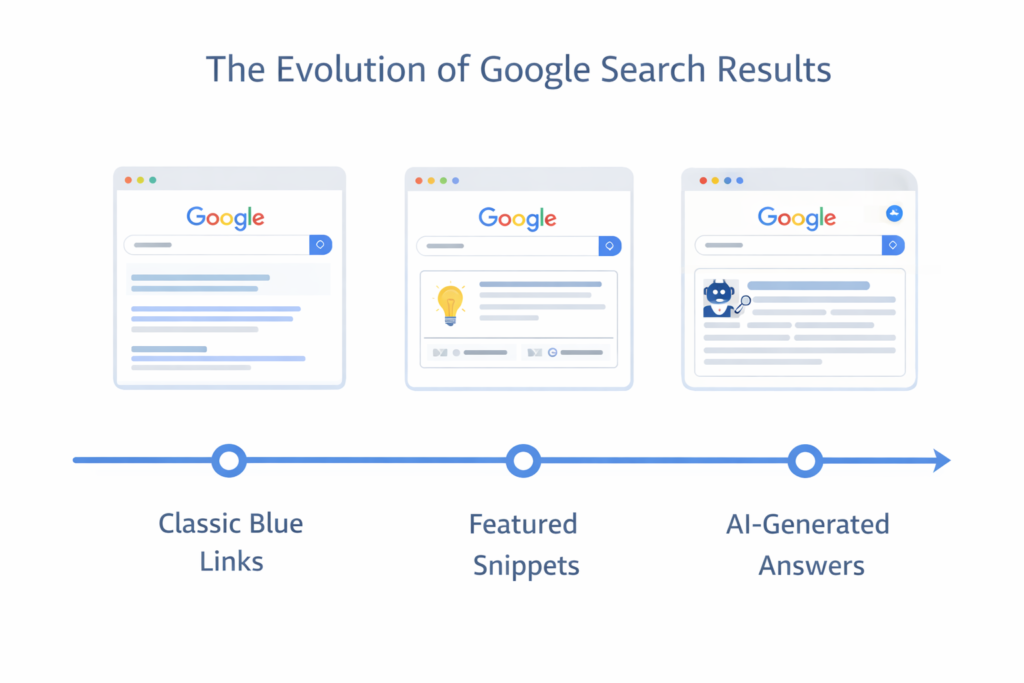
To understand where Google is today, you need to look at where it came from. Search engines used to be simple matchmakers. You typed a keyword, Google looked for pages containing that keyword, and voilà—results appeared. Rankings were heavily influenced by exact-match phrases, backlinks, and basic on-page optimization.
Fast forward to today, and Google is no longer just a search engine; it’s an answer engine. With machine learning models like RankBrain, BERT, MUM, and now generative AI systems powering AI Overviews, Google is interpreting meaning, not just words. It understands synonyms, context, intent, and even nuance. A query like “best way to lose weight safely” isn’t just about diet—it’s about health, credibility, and personalization.
This evolution means Google is actively trying to reduce friction for users. Why make someone click five links when AI can summarize the best answer instantly? From featured snippets to People Also Ask boxes to AI-generated summaries, Google’s SERP is designed to solve rather than redirect. And that changes everything for SEO.
What Is Google’s AI-Driven SERP?
Google’s AI-driven SERP refers to search results that are heavily influenced—or directly generated—by artificial intelligence. The most notable example is AI Overviews, part of Google’s Search Generative Experience (SGE). These overviews synthesize information from multiple authoritative sources and present a concise answer at the top of the page.
Instead of ranking pages alone, Google’s AI selects passages, ideas, and entities from across the web. This means your content might be used even if users never click your link. Visibility now includes being cited, summarized, or referenced by AI.
What makes this challenging is that AI Overviews don’t follow traditional ranking logic. They favor:
-
Clear, factual explanations
-
Structured information
-
Trusted sources
-
Content that directly answers questions
In other words, Google’s AI is less impressed by flashy SEO tricks and more impressed by clarity and usefulness. If your content reads like it was written for humans first—and search engines second—you’re already ahead.
How Google’s AI Actually Thinks About Content
Google’s AI doesn’t “read” content the way humans do. It breaks text down into concepts, relationships, and entities. Instead of focusing on how many times you used a keyword, it asks questions like:

-
What is this page about?
-
How does it relate to known topics?
-
Is the information consistent with trusted sources?
-
Does it satisfy user intent?
This shift from keyword-based indexing to semantic search means Google understands that “AI SEO,” “search generative optimization,” and “ranking in AI SERPs” are related ideas. It connects dots behind the scenes using knowledge graphs and entity recognition.
Think of your content as a puzzle piece. Google’s AI wants to know where it fits in the bigger picture. Does it reinforce existing knowledge? Does it add new insights? Or does it just repeat what’s already been said a thousand times?
The more clearly you define your topic, subtopics, and relationships, the easier it is for AI to trust and surface your content.
Why Traditional SEO Alone No Longer Works
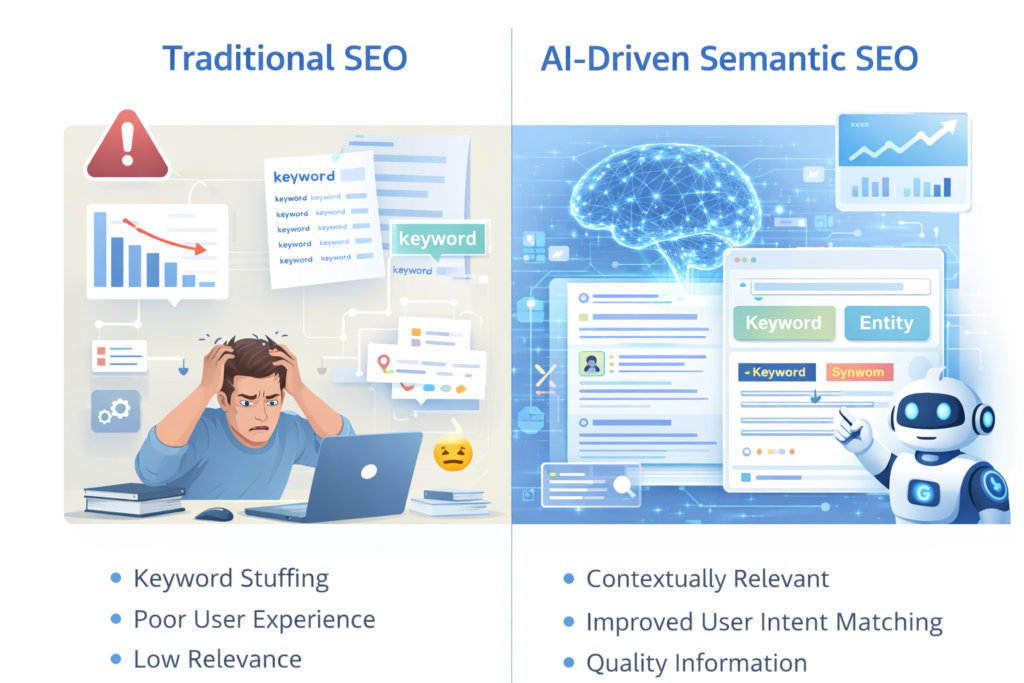
Traditional SEO focused heavily on mechanics—keywords, meta tags, backlinks. While these still matter, relying on them alone is like using a paper map in a world of GPS. The landscape has changed.
AI-driven SERPs have led to a rise in zero-click searches, where users get their answers directly on Google. This means ranking #1 doesn’t guarantee traffic anymore. Instead, visibility, brand recognition, and authority are becoming the real currency.
Another issue is that keyword-stuffed content often sounds robotic. Google’s AI is trained on natural language, not SEO templates. Content that feels forced or unnatural is less likely to be selected for AI summaries.
In short, traditional SEO tactics without context, depth, and human value are becoming obsolete. The new game is about earning trust, not just rankings.
E-E-A-T: The Core of AI SERP Rankings
If there’s one framework you must understand to rank in AI-driven SERPs, it’s E-E-A-T: Experience, Expertise, Authoritativeness, and Trustworthiness. Google uses this concept to evaluate content quality, especially in sensitive niches like health, finance, and technology.
-
Experience means first-hand knowledge. Content written by someone who has actually done the thing ranks better.
-
Expertise refers to subject-matter knowledge and depth.
-
Authoritativeness comes from recognition—citations, mentions, and backlinks.
-
Trustworthiness includes accuracy, transparency, and security.
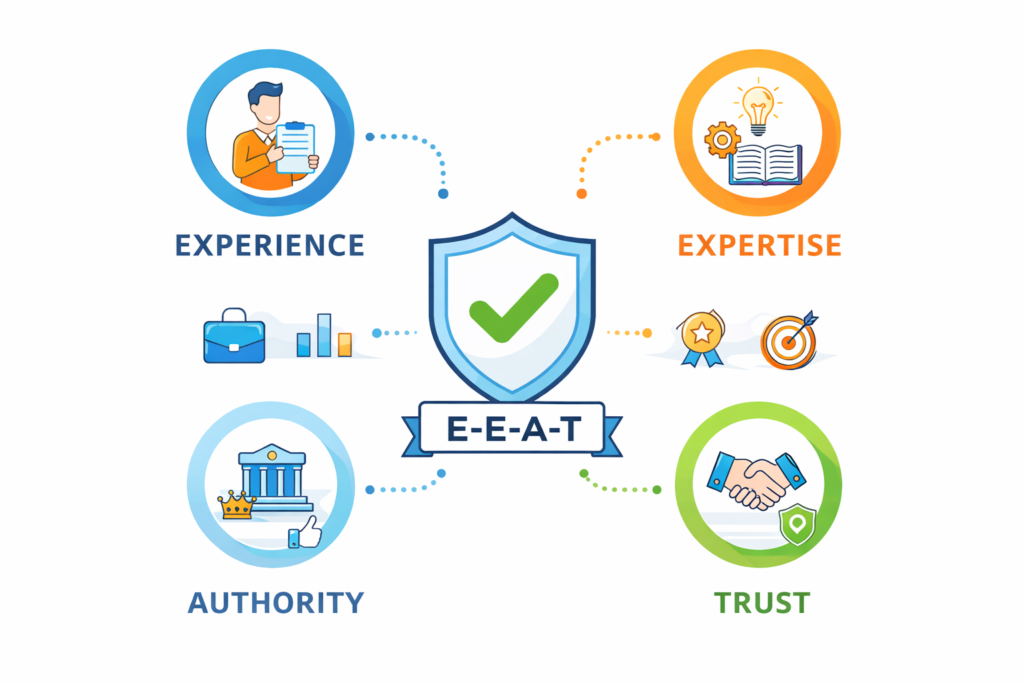
AI systems are particularly sensitive to misinformation. If your content lacks clear authorship, sources, or credibility signals, it’s unlikely to be featured in AI Overviews. Adding author bios, citing reputable sources, and maintaining factual accuracy are no longer optional—they’re essential.
Topical Authority: The New Ranking Power
Topical authority is about owning a subject, not just a keyword. Instead of publishing one article and moving on, you build a content ecosystem around a topic. This helps Google’s AI see you as a reliable source.
For example, instead of just writing about “AI-driven SERP,” you’d cover:
-
AI SEO fundamentals
-
Google SGE updates
-
Entity SEO
-
Content optimization for AI
-
Case studies and examples
By interlinking these articles, you create a semantic web that signals depth and consistency. Google’s AI loves patterns. When it sees your site repeatedly covering related topics with quality, it begins to trust you.
This approach also improves user engagement. Readers stay longer, explore more pages, and signal satisfaction—all positive indicators for AI-driven rankings.
Optimizing Content for AI Overviews
AI Overviews pull information from content that is easy to understand and easy to extract. That means structure matters more than ever. Clear headings, concise definitions, bullet points, and summaries help AI identify valuable sections.
An effective strategy is answer-first content. Start sections with direct, clear answers before expanding with explanations and examples. This mirrors how AI summarizes information.
Also, avoid fluff. While conversational tone is important, unnecessary filler can dilute clarity. The goal is to sound human and precise—a balance that AI rewards.
Entity-Based SEO: How to Become an AI-Recognized Brand
Entities are people, places, brands, or concepts that Google recognizes as distinct “things.” In an AI-driven SERP, ranking isn’t just about pages—it’s about being a known entity.
You can strengthen entity recognition by:
-
Using consistent brand names
-
Creating detailed About pages
-
Implementing schema markup
-
Getting mentioned on authoritative sites
Schema markup helps Google understand context. It tells AI who you are, what you do, and how you relate to other entities. This structured data acts like a translator between your content and Google’s AI.
Humanized Content: Why AI Still Prefers Humans
Ironically, in an AI-driven SERP, human writing matters more than ever. Google’s AI is trained to detect natural language patterns—stories, analogies, emotional cues. Content that feels alive performs better than sterile, machine-generated text.
Humanized content keeps readers engaged. It answers real questions, anticipates doubts, and speaks in a relatable tone. Behavioral signals like dwell time, scroll depth, and engagement tell Google that users find your content valuable.
In other words, writing for humans is writing for AI.
User Intent Optimization in an AI World
Understanding user intent is the backbone of modern SEO. Google’s AI categorizes intent at a granular level. A search for “AI SEO tools” could mean:
-
Someone researching options
-
Someone ready to buy
-
Someone comparing features
Your content should clearly match one primary intent. Mixing intents confuses AI and users alike. Clear intent alignment improves relevance and increases the chances of being selected for AI summaries.
Technical SEO for AI SERPs
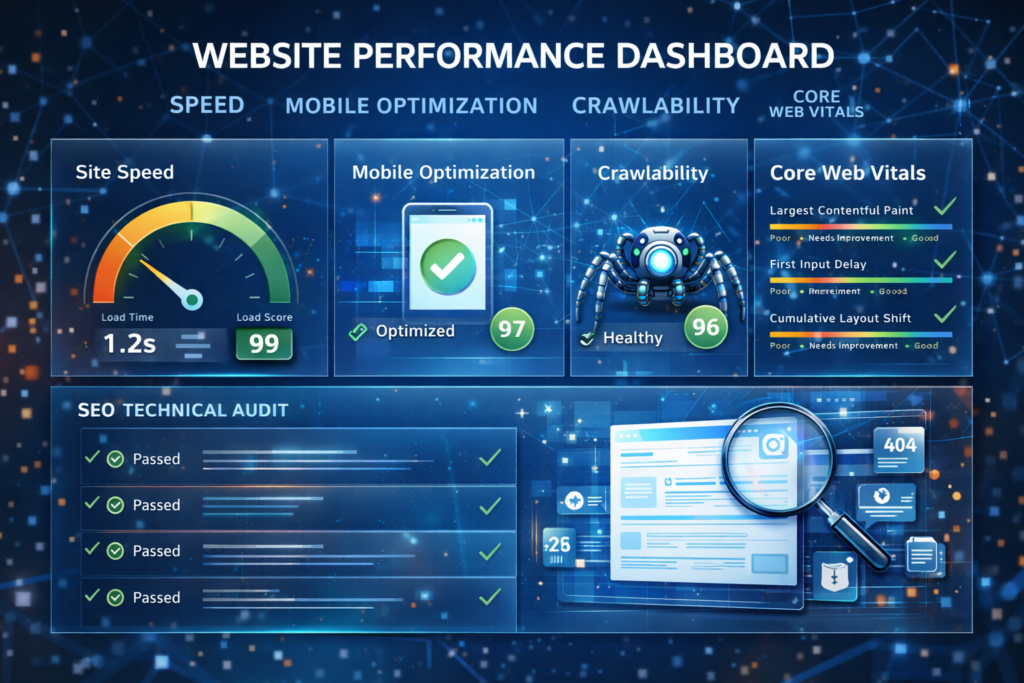
Even the best content won’t rank if your site is technically flawed. AI systems still rely on clean, accessible websites. Fast loading times, mobile optimization, proper indexing, and secure connections all play a role.
Core Web Vitals are especially important. If users bounce because your page is slow or unstable, AI takes notice. Technical SEO is the foundation that allows AI to access and evaluate your content efficiently.
Visual Search and Multimodal SEO
Google’s AI isn’t limited to text. It understands images, videos, and even audio. Optimizing visuals with descriptive alt text, proper filenames, and contextual relevance increases your chances of appearing in multimodal search results.
Videos, especially on YouTube, are increasingly integrated into SERPs. Embedding relevant videos enhances user experience and strengthens topical authority.
Backlinks Still Matter—But Differently
Backlinks are no longer about volume. AI evaluates the context of links. A mention from a trusted source in your niche carries more weight than dozens of generic links.
Brand mentions without links also matter. They reinforce entity authority and help Google’s AI understand your relevance in the broader ecosystem.
Future-Proof SEO Strategies for AI SERPs
The only constant in AI-driven search is change. Algorithms evolve, models improve, and SERP layouts shift. The safest strategy is focusing on quality, trust, and user value.
Build a brand, not just pages. Create content that helps, educates, and resonates. When you do that, algorithm updates become less threatening and more like opportunities.
Conclusion
Ranking in Google’s new AI-driven SERP isn’t about chasing algorithms—it’s about understanding them. AI rewards clarity, credibility, structure, and humanity. When you align your content with how Google’s AI processes information and how humans consume it, rankings become a natural byproduct.
The future of SEO belongs to those who can blend technical precision with genuine human connection. Master that balance, and you won’t just rank—you’ll remain visible no matter how search evolves.